Products at Nuvantara ↗

The catalogue lives on nuvantara.com — this site sells nothing.

Unreviewed draft. This monograph was prepared editorially with AI assistance and has not yet been signed off by a named expert reviewer. It is published for information and education only, with its sources cited throughout — it is not medical advice. How review works
Monograph · Acanthaceae

Andrographis paniculata

Hempedu bumi · Malay   Sambiloto · Indonesian   King of bitters · English
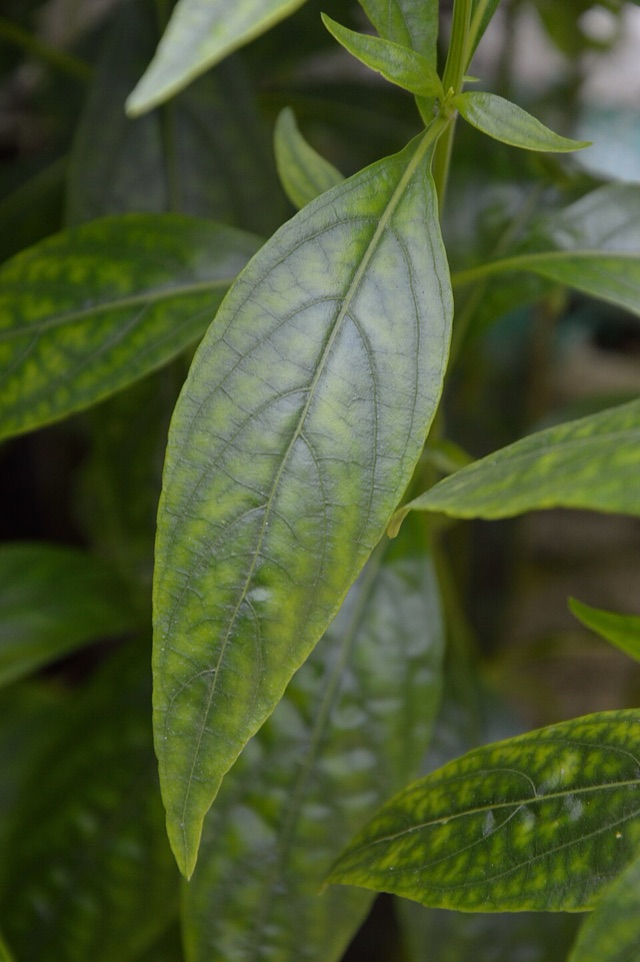
Andrographis paniculata — botanical illustration
Andrographis paniculata — from the historical botanical record; see illustration credits on the library page.
Evidence grade
Pre-clinical work or documented traditional use only
What the grades mean

Hempedu bumi is thoroughly documented in Malay materia medica and richly studied as an oral herb, but the topical question this monograph asks has almost no direct evidence: one rat wound study and mechanism work on andrographolide, with no human trial of the plant on skin.

Safety at a glance

The oral safety record is comparatively well characterised: a 2021 systematic review and meta-analysis found serious adverse events very rare across ten randomised trials [7]. The signal that matters for skin products is… Full safety section

The evidence ladder
Systematic review
Clinical studies
Human observational
Preclinical ← current position
Laboratory
Phytochemical
Traditional use
Human studies None for topical use. An extensive oral trial literature exists for respiratory indications, which this monograph's scope excludes; it is cited only to show where the clinical evidence actually sits.

The ladder explains the grade; it never replaces it. Evidence for this botanical reaches preclinical, which is why this monograph is graded C.

Traditional use

"Bile of the earth" is a name earned by taste: hempedu bumi is among the
bitterest plants in the Malay garden pharmacopoeia. Ong and colleagues'
2011 ethnobotanical survey in Kampung Mak Kemas, Terengganu, records the
plant in living Malay use — as infusions and decoctions taken for fever
and other internal complaints [1]. That detail matters for this monograph:
the well-documented Malay uses are oral. The wider regional record,
assembled in the Hossain 2014 review, includes external skin applications
in Indian and Chinese tradition [2], so the topical framing has a
traditional basis — but a thinner and less local one, and this entry says
so rather than assuming it.

Phytochemistry

The plant's bitterness and most of its studied activity belong to the
diterpene lactones — andrographolide first, with neoandrographolide and
14-deoxyandrographolide alongside — plus flavonoids and polyphenols,
characterised in the Chao and Lin 2010 review [3]. Andrographolide is a
covalent inhibitor of NF-κB activation, a mechanism Xia and colleagues
(2004) mapped to a specific cysteine residue [4] — laboratory work that
makes the skin question plausible without answering it.

Evidence review

Direct evidence for skin use is a single preclinical study: Al-Bayaty and
colleagues (2012) applied 5% and 10% leaf-extract dressings to wounds in
rats and reported faster closure and narrower scars than placebo [5].
Nothing in the verified human literature tests the plant on skin. The
substantial clinical corpus — summarised for upper respiratory infection
by Coon and Ernst (2004) [6] — is oral, and is cited here only to show
where the clinical evidence actually lives.

A traditional practice documented mostly for oral use, one animal study
for the topical route, and no human data: that is a C, and the honest
question is whether the topical framing deserves clinical study at all
before a formulated product leans on it.

Safety & interactions

The oral safety record is comparatively well characterised: a 2021
systematic review and meta-analysis found serious adverse events very rare
across ten randomised trials [7]. The signal that matters for skin
products is hypersensitivity: Thai pharmacovigilance data record
urticaria, pruritus, angioedema and anaphylaxis among users [8]. Whether
systemic hypersensitivity translates into contact sensitisation on
compromised skin has not been studied — no patch-test data exist — so a
cautious patch test before use and immediate discontinuation on any
reaction are the sensible minimum. Not for broken skin; diagnosed skin
conditions need clinical care.

Two further findings belong here. A systematic review and meta-analysis
separated the adverse-event profile of injectable andrographolide
derivative medicines from that of whole-herb preparations, which are the
better tolerated of the two [9] — a distinction worth preserving whenever
the Thai pharmacovigilance signals are cited. And Malaysian work at
Universiti Kebangsaan Malaysia reported suppression of male reproductive
parameters in rats given a methanolic extract [10]. That is an animal
result for an oral route, but it is a locally generated signal in a plant
widely taken as a household remedy, and it is the finding most deserving
of a reviewer's attention here.

References18
  1. Ong HC, Zuki RM, Milow P (2011). Traditional knowledge of medicinal plants among the Malay villagers in Kampung Mak Kemas, Terengganu, Malaysia. Studies on Ethno-Medicine 5(3): 175–185. Source
  2. Hossain MS, Urbi Z, Sule A, Rahman KMH (2014). Andrographis paniculata (Burm. f.) Wall. ex Nees: a review of ethnobotany, phytochemistry, and pharmacology. The Scientific World Journal 2014: 274905. Source
  3. Chao WW, Lin BF (2010). Isolation and identification of bioactive compounds in Andrographis paniculata (Chuanxinlian). Chinese Medicine 5: 17. Source
  4. Xia YF, et al. (2004). Andrographolide attenuates inflammation by inhibition of NF-kappa B activation through covalent modification of reduced cysteine 62 of p50. Journal of Immunology 173(6): 4207–4217. Source
  5. Al-Bayaty FH, et al. (2012). Effect of Andrographis paniculata leaf extract on wound healing in rats. Natural Product Research 26(5): 423–429. Source
  6. Coon JT, Ernst E (2004). Andrographis paniculata in the treatment of upper respiratory tract infections: a systematic review of safety and efficacy. Planta Medica 70(4): 293–298. Source
  7. Worakunphanich W, et al. (2021). Safety of Andrographis paniculata: a systematic review and meta-analysis. Pharmacoepidemiology and Drug Safety 30(6): 727–739. Source
  8. Suwankesawong W, Saokaew S, Permsuwan U, Chaiyakunapruk N (2014). Characterization of hypersensitivity reactions reported among Andrographis paniculata users in Thailand using Health Product Vigilance Center (HPVC) database. BMC Complementary and Alternative Medicine 14: 515. Source
  9. Zakaria SM, Che Amri CNA, Shahari R (2020). Ethnobotany and traditional knowledge of Acanthaceae in Peninsular Malaysia: a review. Pharmacognosy Journal 12(6): 1482–1488. Source
  10. Ong HC, Ruzalila BN, Milow P (2011). Traditional knowledge of medicinal plants among the Malay villagers in Kampung Tanjung Sabtu, Terengganu, Malaysia. Indian Journal of Traditional Knowledge 10(3): 460–465. Source
  11. Ramli MR, Milow P, Malek S (2021). Diversity and traditional knowledge of medicinal plants in home gardens of Kampung Masjid Ijok, Perak, Malaysia. Biodiversitas 22(5): 2458–2465. Source
  12. Abdulrahman MD, Ali AM, Nur Fatihah HN, Khandaker MM, Nashriyah M (2018). Traditional medicinal knowledge of Malays in Terengganu, Peninsular Malaysia. Malayan Nature Journal 70(3): 349–364. Source
  13. Ulfa R, Fatmah, Utomo SW (2025). Community knowledge and uses of sambiloto (Andrographis paniculata) in an urban herbal village, Surabaya, East Java, Indonesia. Biodiversitas 26(8): 4017–4022. Source
  14. Intharuksa A, Arunotayanun W, Yooin W, Sirisa-Ard P (2022). A comprehensive review of Andrographis paniculata (Burm. f.) Nees and its constituents as potential lead compounds for COVID-19 drug discovery. Molecules 27(14): 4479. Source
  15. Shang YX, Shen C, Stub T, et al. (2022). Adverse effects of andrographolide derivative medications compared to the safe use of herbal preparations of Andrographis paniculata: results of a systematic review and meta-analysis of clinical studies. Frontiers in Pharmacology 13: 773282. Source
  16. Songvut P, Suriyo T, Panomvana D, Rangkadilok N, Satayavivad J (2022). A comprehensive review on disposition kinetics and dosage of oral administration of Andrographis paniculata, an alternative herbal medicine, in co-treatment of coronavirus disease. Frontiers in Pharmacology 13: 952660. Source
  17. Siripongboonsitti T, Ungtrakul T, Tawinprai K, et al. (2023). Efficacy of Andrographis paniculata extract treatment in mild to moderate COVID-19 patients being treated with favipiravir: a double-blind, randomized, placebo-controlled study (APFaVi trial). Phytomedicine 119: 155018. Source
  18. Dayang Nurul Fatihah MN, Mahanem MN (2015). Fertility suppression in male Sprague-Dawley rats by administration of methanolic extract of hempedu bumi (Andrographis paniculata). Sains Malaysiana 44(9): 1249–1255. Source
Open questions4
  • Does the documented systemic hypersensitivity signal translate into contact-sensitisation risk on compromised skin? No patch-test or repeat-insult data exist.
  • Is andrographolide stable and skin-penetrant in leave-on formats at the concentrations used in the rat wound study?
  • Malay records confirm oral use; whether a specifically topical Malay practice exists, or the topical framing is extrapolated from Indian and Chinese tradition, deserves ethnobotanical fieldwork.
  • A Malaysian animal study reports suppression of male reproductive parameters with oral methanolic extract. Whether this has any bearing on human use — or on topical use at all — is unexamined, and it is the safety question this entry most needs answered.