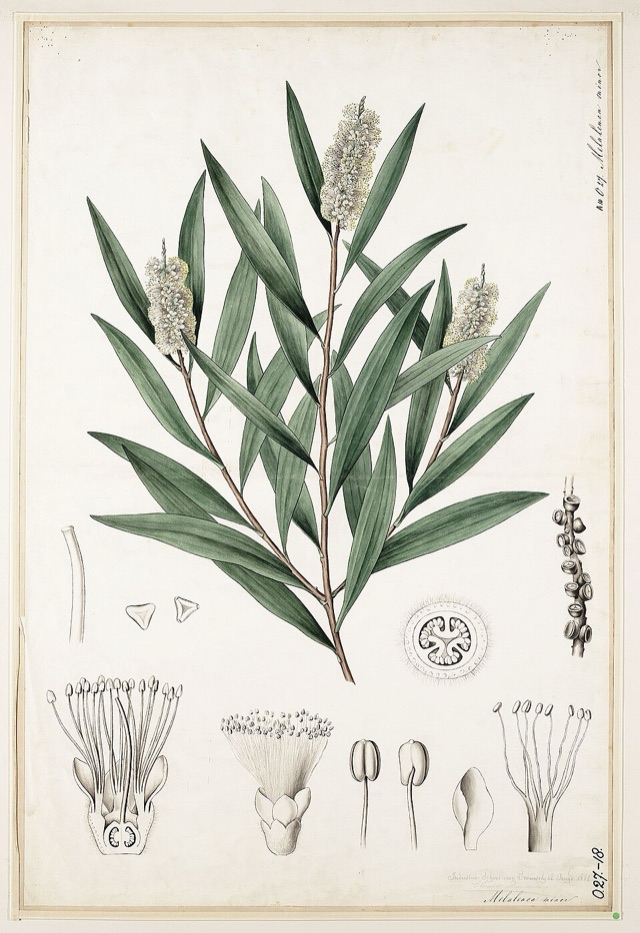
The clinical evidence usually offered for cineole-rich vapour products
belongs to a different plant and a different route. Kehrl and colleagues
(2004) ran a double-blind, placebo-controlled trial of purified cineole —
eucalyptus-derived, in oral capsules — in 152 patients with acute
rhinosinusitis and reported meaningful symptom improvement [5]. Worth and
colleagues (2009) found oral cineole at 200 mg three times daily reduced
exacerbations in COPD in a placebo-controlled trial of 242 patients [6].
Both are trials of purified 1,8-cineole taken orally, and neither tests
cajuput oil or a vapour route.
Cajuput-specific research is at the laboratory bench: Al-Abd and
colleagues (2015) characterised the extract's activity against
Staphylococcus aureus and other organisms in vitro [7]. That is the
honest position: a household practice of long standing, a well-studied
principal constituent, and no clinical trial of the oil itself in its
traditional use. Grade C.
One human trial of the oil itself has now been published. An Indonesian
randomised controlled trial in 127 patients with mild-to-moderate COVID-19
used cajuput oil inhalation as an adjuvant to standard therapy and
reported a shorter hospital stay [10]. It is a single trial, in one
country, for an indication far from traditional household use — but it is
the first clinical evidence for cajuput oil rather than for eucalyptus
cineole, and it is why the ladder now reaches the clinical rung. The
grade stays at C: one trial in an unrelated indication does not establish
the traditional use.
A recent Malaysian review of the species is explicit that safety studies
and clinical trials remain outstanding [11].