Bergamot
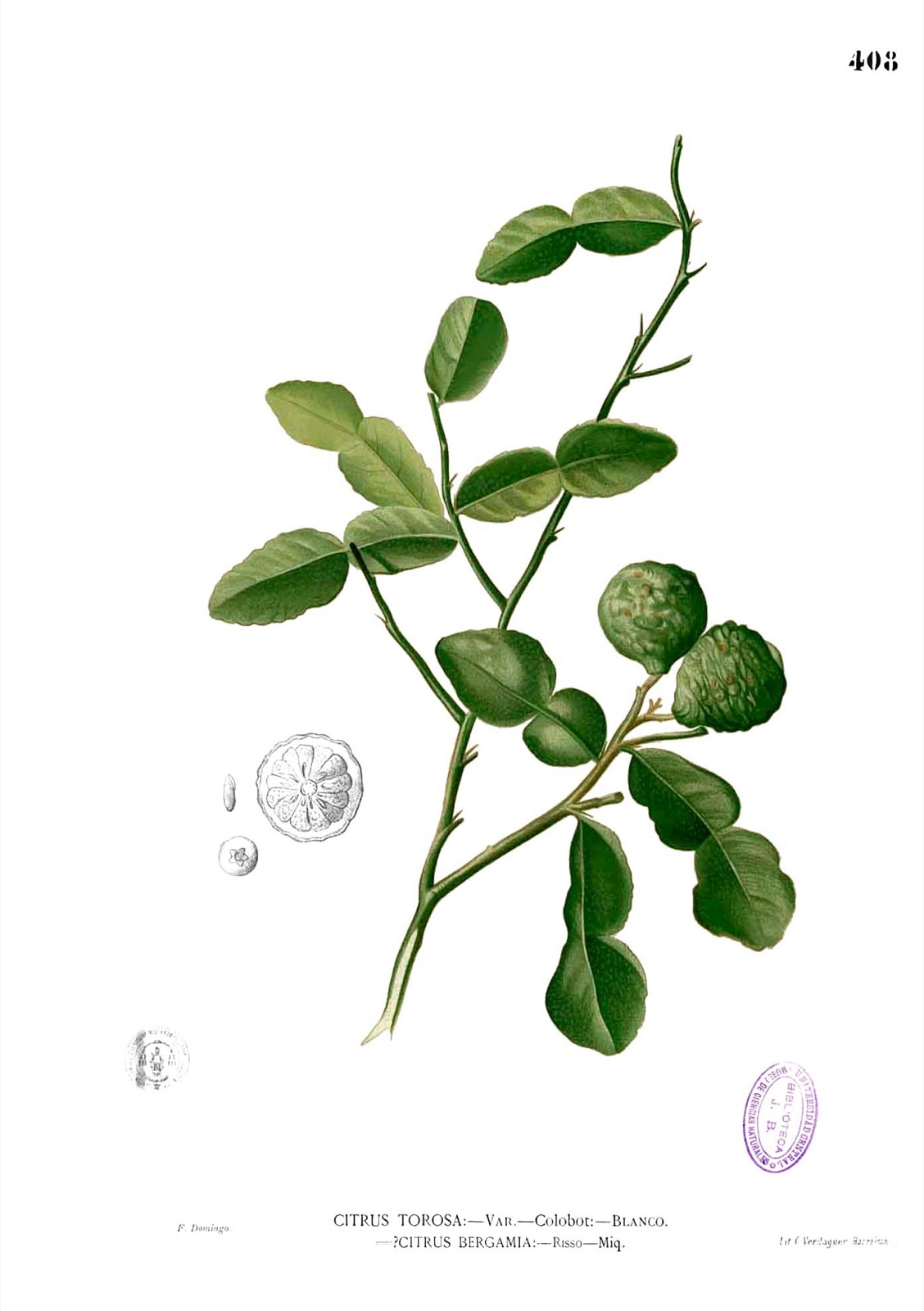
Citrus bergamia
ENBergamot, Bergamot orange
- MSBergamot
- ENBergamot
Synonyms: Citrus ×aurantium subsp. bergamia (Risso) Wight & Arn. ex Engl., Citrus ×bergamota Raf.
Family: Rutaceae
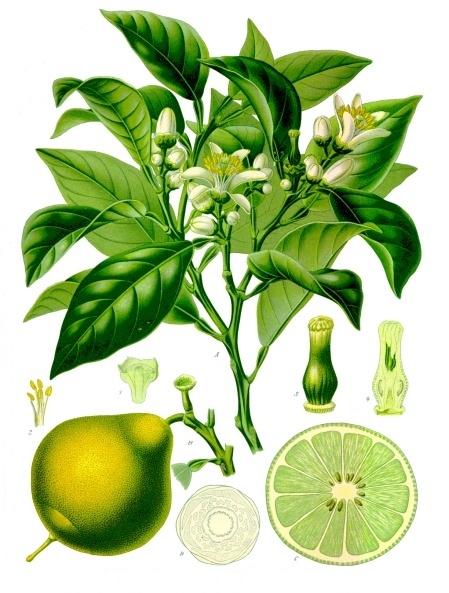
Bergamot is a fragrant citrus grown mainly for the essential oil taken from its fruit, a bright note in perfumery and an ingredient in food and confectionery. It is a cultivated citrus hybrid.
- Parts used
- Fruit, Essential oil
- Native range
- Introduced or naturalised. The checklist places this name under Citrus ×limon, a cultigen derived from artificial hybrids, which it lists as introduced in 50 regions including Borneo (WCVP).
- Habitat
- Garden
- Scent profile
- Citrus, Floral, Sweet
Traditional and heritage uses
Bergamot is sold under the name Citrus bergamia [2]. The World Checklist of Vascular Plants lists Citrus ×bergamia as a synonym of Citrus ×limon, the lemon, which it describes as a cultigen derived from artificial hybrids [1]. A 2015 review describes bergamot as a hybrid of bitter orange and lemon that is endemic to Calabria in Italy [2]. Genetic work on limes and lemons finds many independent hybrid origins among them [3].
Scent profile
- Citrus Bright, sweet peel.
- Floral A light floral edge.
- Sweet A soft sweetness that stays as the oil dries.
Trade history
Bergamot fruit is grown primarily for its essential oil, which is used in perfume, cosmetics, food and confectionery [2]. In the Nusantara the checklist records Citrus ×limon, the species it places bergamot under, as introduced in Borneo [1].
Cautions and safety
Bergamot oil contains bergapten, a light-sensitising compound. Photopatch tests on human skin found that bergamot oil and bergapten produced phototoxic reactions on exposure to light [4]. Keep skin that has had the oil on it out of strong sun. Consult a qualified professional before internal use.
This entry is for information only and is not medical advice.
Sources (4)
- WCVP (2026). Citrus ×limon (L.) Osbeck. World Checklist of Vascular Plants, the checklist behind Kew POWO, published through GBIF (taxon 207775042; IPNI 60454758-2). Accessed 12 November 2026. Source
- Navarra M, Mannucci C, Delbò M, Calapai G (2015). Citrus bergamia essential oil: from basic research to clinical application. Front Pharmacol 6: 36. Source
- Curk F, Ollitrault F, Garcia-Lor A, Luro F, Navarro L, Ollitrault P (2016). Phylogenetic origin of limes and lemons revealed by cytoplasmic and nuclear markers. Ann Bot 117(4): 565-583. Source
- Zaynoun ST, Johnson BE, Frain-Bell W (1977). A study of oil of bergamot and its importance as a phototoxic agent. Contact Dermatitis 3(5): 225-239. Source