Nilam
Pogostemon cablin
ENPatchouli
- MSNilam
- IDNilam
- ENPatchouli
Synonyms: Mentha cablin Blanco, Pogostemon comosus Miq.
Family: Lamiaceae
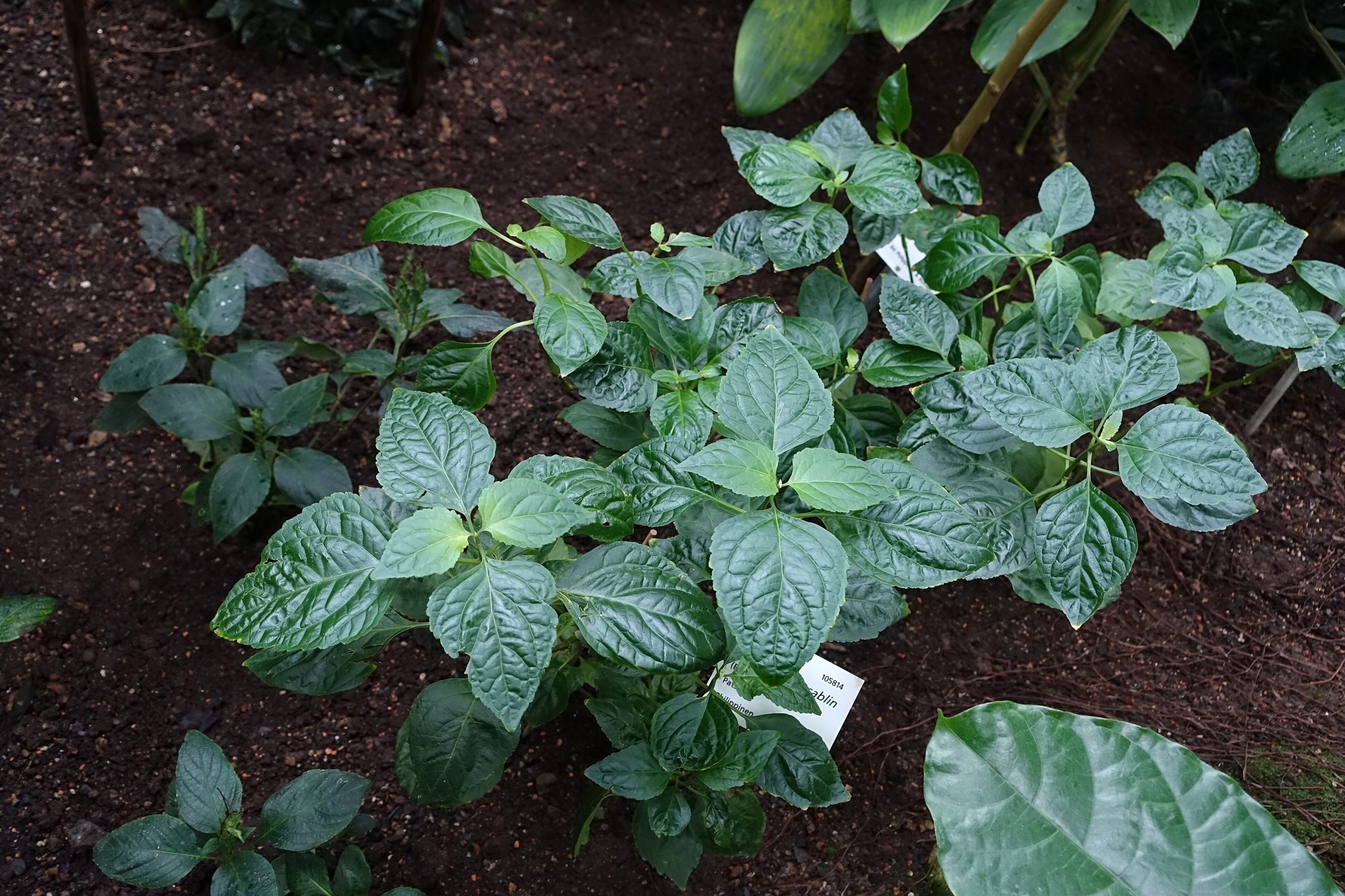
Nilam, patchouli, is a low aromatic herb of the mint family whose dried leaves are distilled into one of perfumery's deepest base notes. It is native from Sri Lanka through western and central Malesia to Papua New Guinea.
- Parts used
- Leaf, Essential oil
- Native range
- Native. Sri Lanka, W. & C. Malesia, Papua New Guinea (POWO/WCVP).
- Habitat
- Garden
- Scent profile
- Earthy, Woody, Sweet, Herbal
Traditional and heritage uses
Nilam is known above all for its essential oil [2]. The plant is native from Sri Lanka through western and central Malesia to Papua New Guinea [1]. Outside the Nusantara it has a long written history in traditional Chinese medicine, where it is known as guanghuoxiang [3].
Scent profile
- Earthy Damp soil and forest floor.
- Woody A dry woody body.
- Sweet A soft, rounded sweetness as it dries.
- Herbal Green leaf at the opening.
Trade history
Patchouli oil is distilled from the leaves and is the plant's main product [2]. Research on the plant now spans the biosynthesis of the terpenoids that give the oil its character [4].
Cautions and safety
Allergic contact dermatitis to a product containing patchouli oil has been reported [5]. Laboratory studies of the oil in animals [6] say nothing about effects in people. Consult a qualified professional before internal use.
This entry is for information only and is not medical advice.
Sources (6)
- POWO (2026). Pogostemon cablin (Blanco) Benth.. Plants of the World Online, Royal Botanic Gardens, Kew; distribution from the World Checklist of Vascular Plants. Accessed 18 October 2026. Source
- Thakur A (2022). Therapeutic potential of Pogostemon cablin herb: a comprehensive review. Pharm Pat Anal 11(6): 213-224. Source
- Junren C, Xiaofang X, Mengting L, et al. (2021). Pharmacological activities and mechanisms of action of Pogostemon cablin Benth: a review. Chin Med 16(1): 5. Source
- Yao YY, He ML, Li YY, et al. (2021). [Biosynthesis and metabolism regulation of terpenoids in Pogostemon cablin: a review]. Zhongguo Zhong Yao Za Zhi 46(21): 5560-5567. Source
- Rosato WA, Danza P, Ciccarese G, et al. (2026). Allergic Contact Dermatitis to a Product Containing Patchouli Essential Oil in a Non-Occupational Setting. Contact Dermatitis 94(4): 421-423. Source
- Ouyang P, Kang D, You W, et al. (2024). Pogostemon cablin essential oil affects anxiety- and depressive-like behaviors and the gut microbiota in chronic unpredictable mild stress model rats. Front Nutr 11: 1303002. Source