Bunga pakma
Rafflesia spp.
ENRafflesia, Corpse flower
- MSBunga pakma
- IDPadma raksasa
- ENRafflesia
Family: Rafflesiaceae
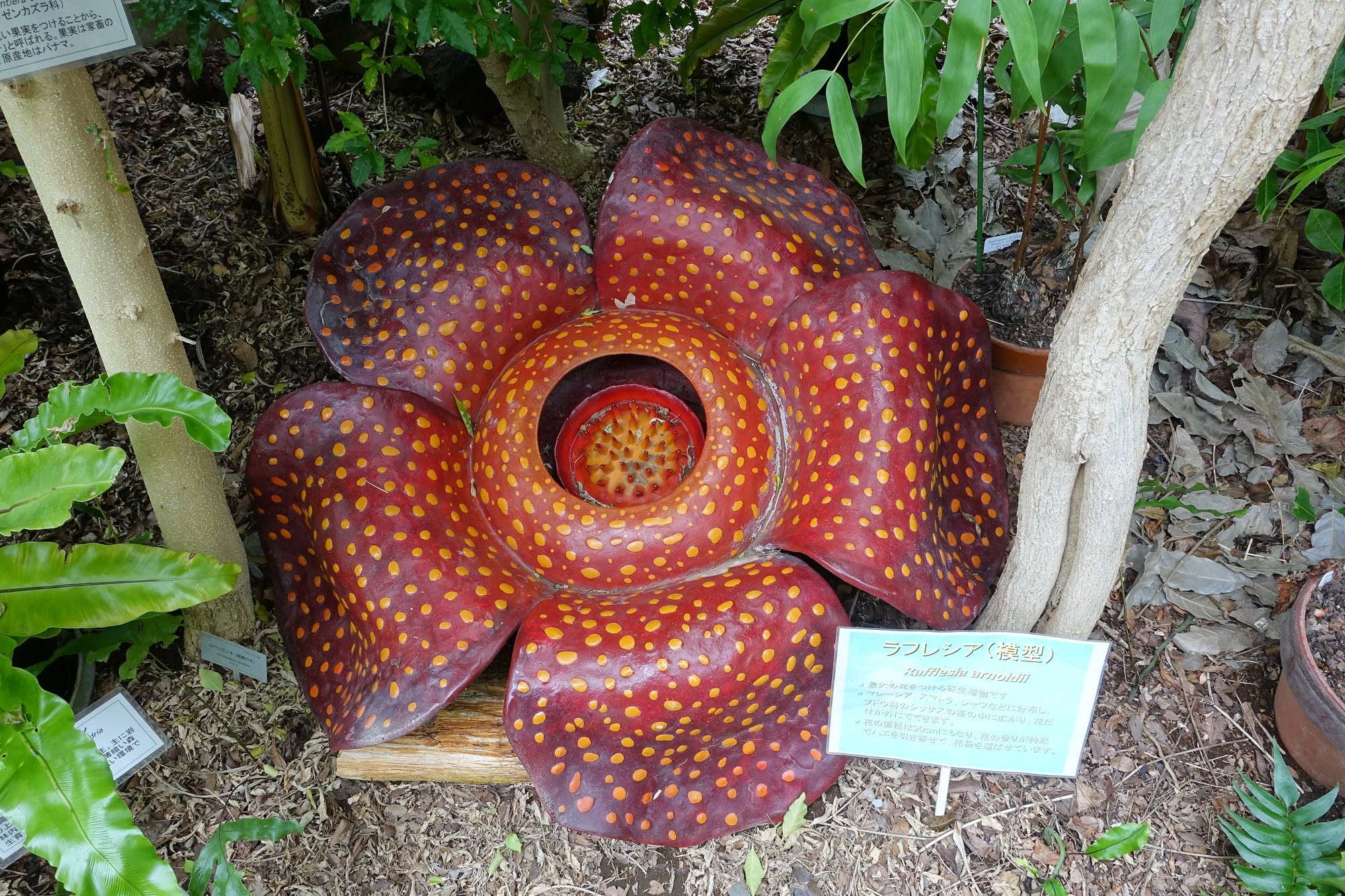
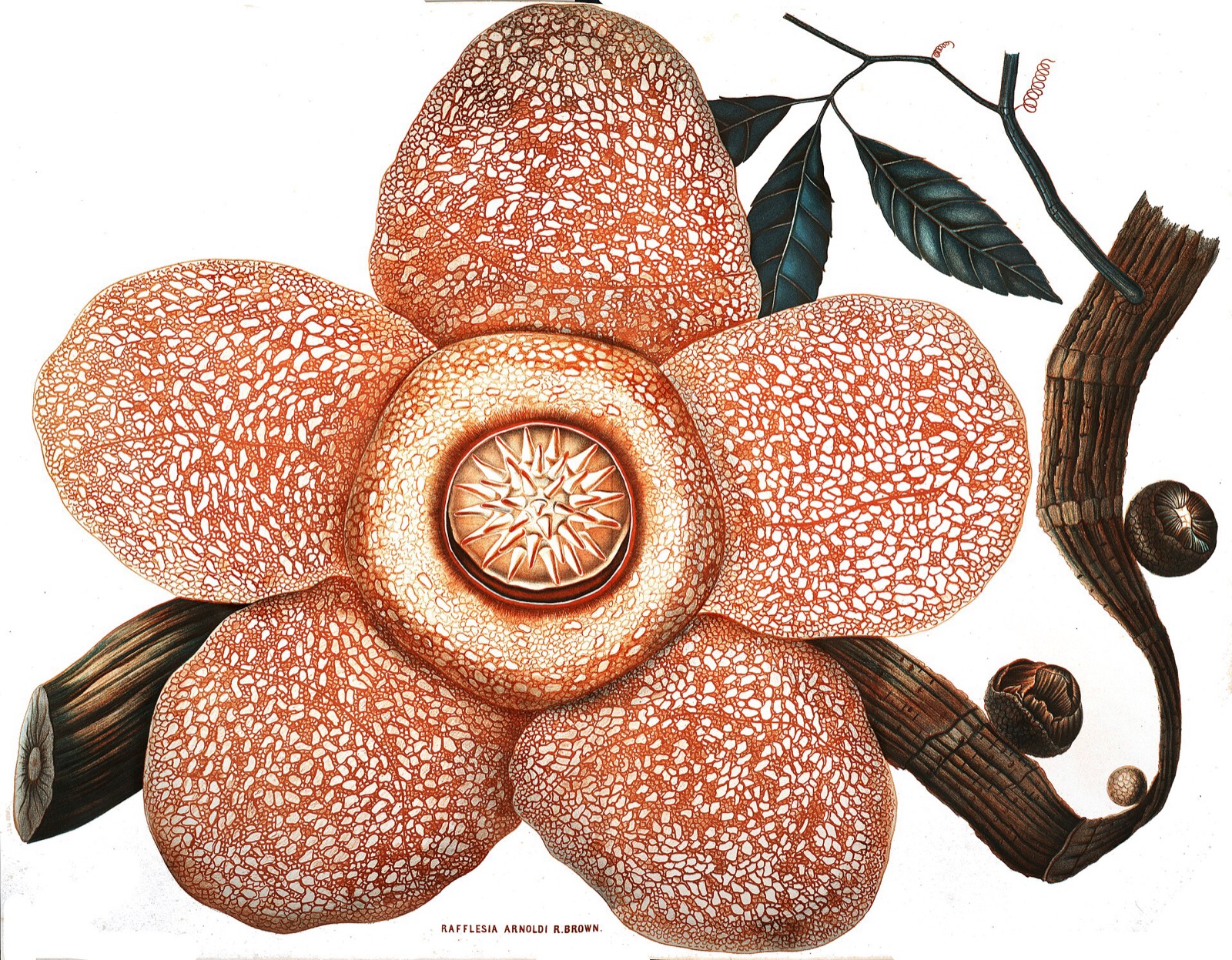
Bunga pakma is Rafflesia, the parasitic plant that produces the world's largest flowers. A 2023 global review estimated that about 60 per cent of its species face a severe risk of extinction [3].
- Parts used
- Flower
- Native range
- Native. Thailand to W. & C. Malesia (POWO/WCVP).
- Habitat
- Wild
- Conservation
- Published assessment: About 60% of species at severe risk of extinction (equivalent to Critically Endangered); only one species on the IUCN Red List
Traditional and heritage uses
Rafflesia species are holoparasites on Tetrastigma vines, spread from the Malay Peninsula across the islands of Indonesia [2]. Flower buds of some species are used in local traditional practice in Malaysia and Indonesia [2].
Trade history
The plant features in local culture across Southeast Asia and is now a source of income from ecotourism [3].
Cautions and safety
Rafflesia must not be collected. Buds harvested for traditional use are one of the pressures on wild populations [2].
This entry is for information only and is not medical advice.
Conservation
- Published assessment
- About 60% of species at severe risk of extinction (equivalent to Critically Endangered); only one species on the IUCN Red List, 2023 [3]
Sources (3)
- POWO (2026). Rafflesia R.Br. ex Gray. Plants of the World Online, Royal Botanic Gardens, Kew; distribution from the World Checklist of Vascular Plants. Accessed 18 October 2026. Source
- Wicaksono A, Mursidawati S, Sukamto LA, et al. (2016). Rafflesia spp.: propagation and conservation. Planta 244(2): 289-96. Source
- Malabrigo P, Tobias AB, Witono J, et al. (2023). Most of the world's largest flowers (genus Rafflesia) are now on the brink of extinction. Plants, People, Planet 7(2): 331–346. Source