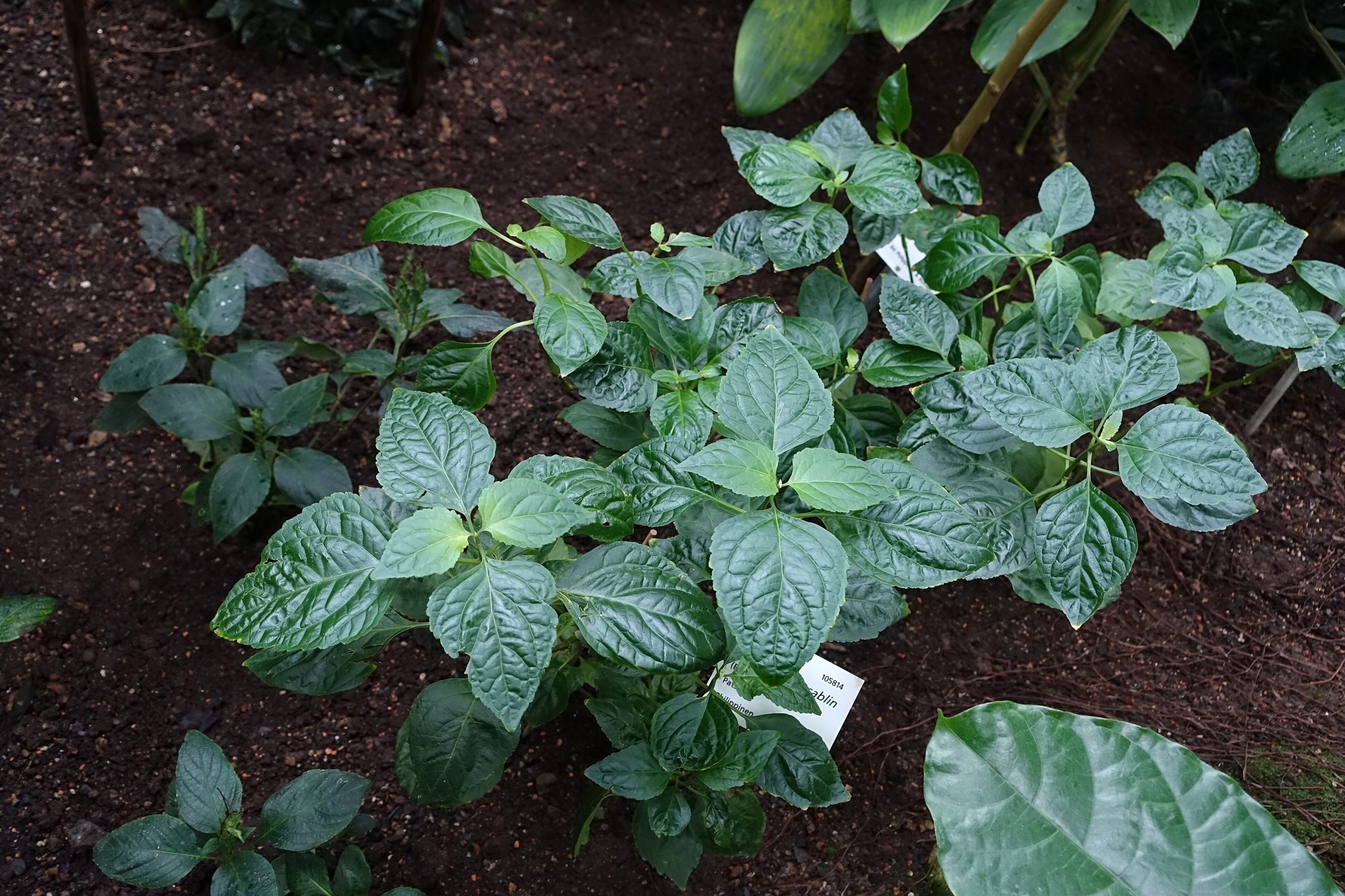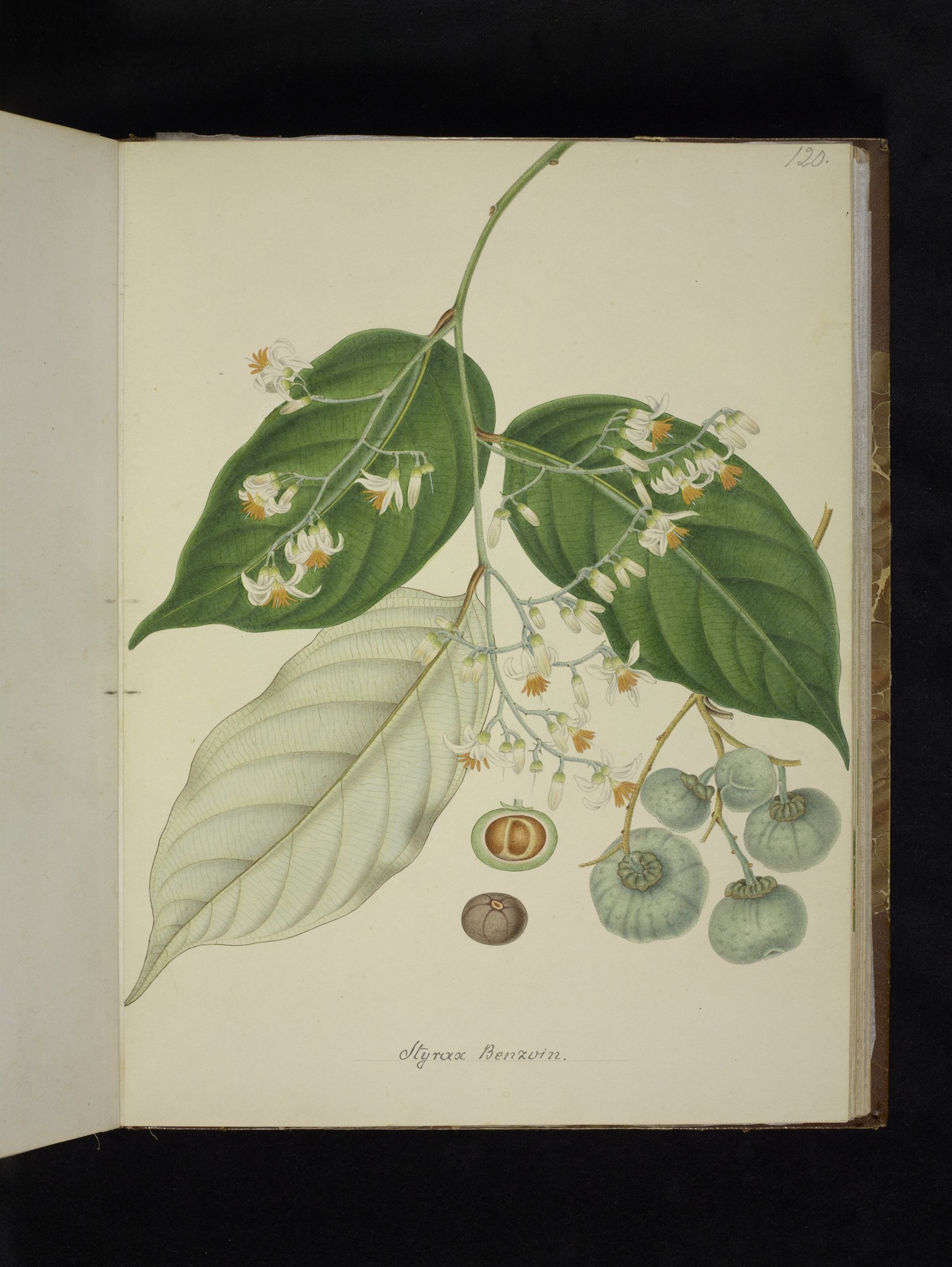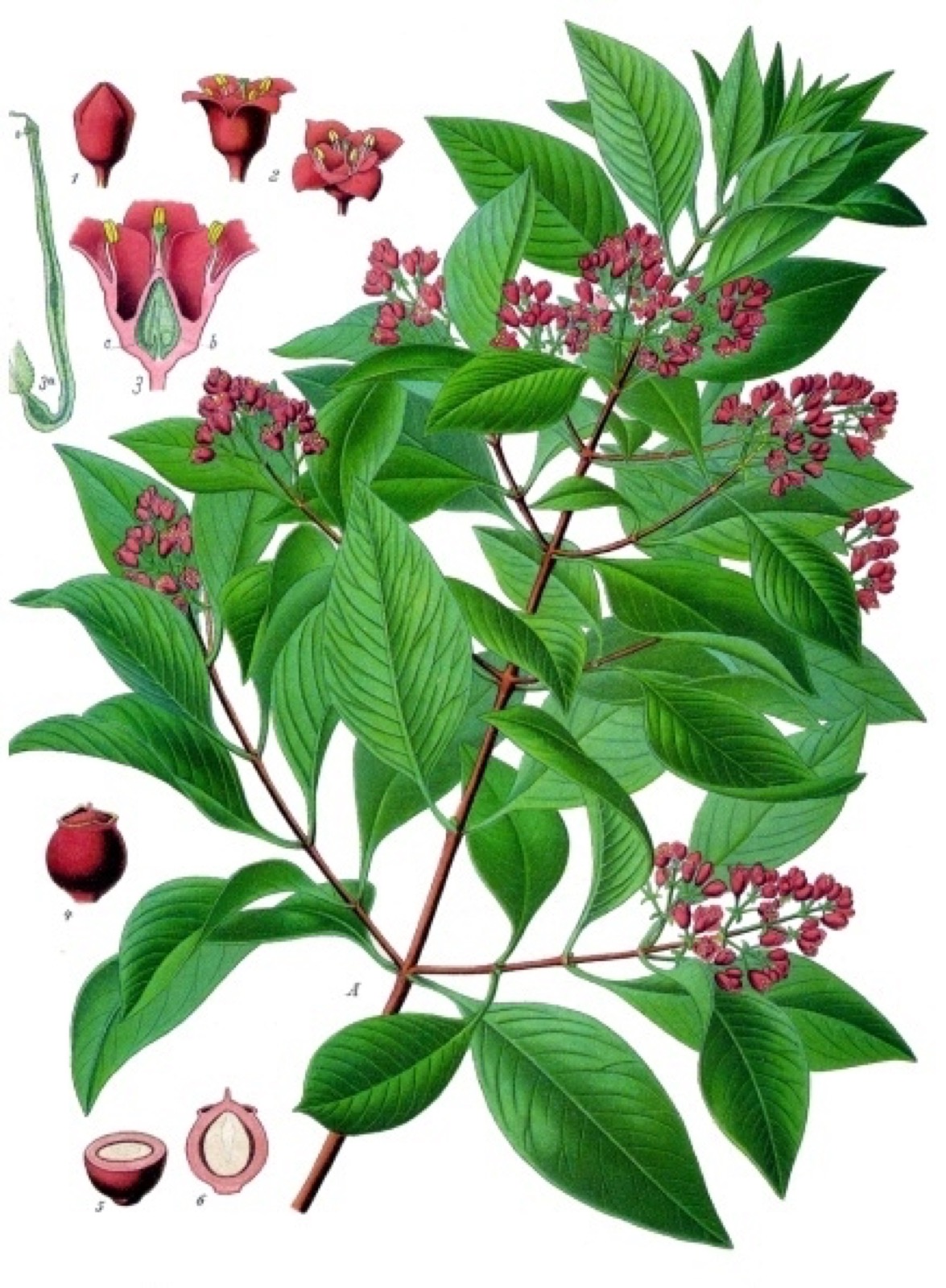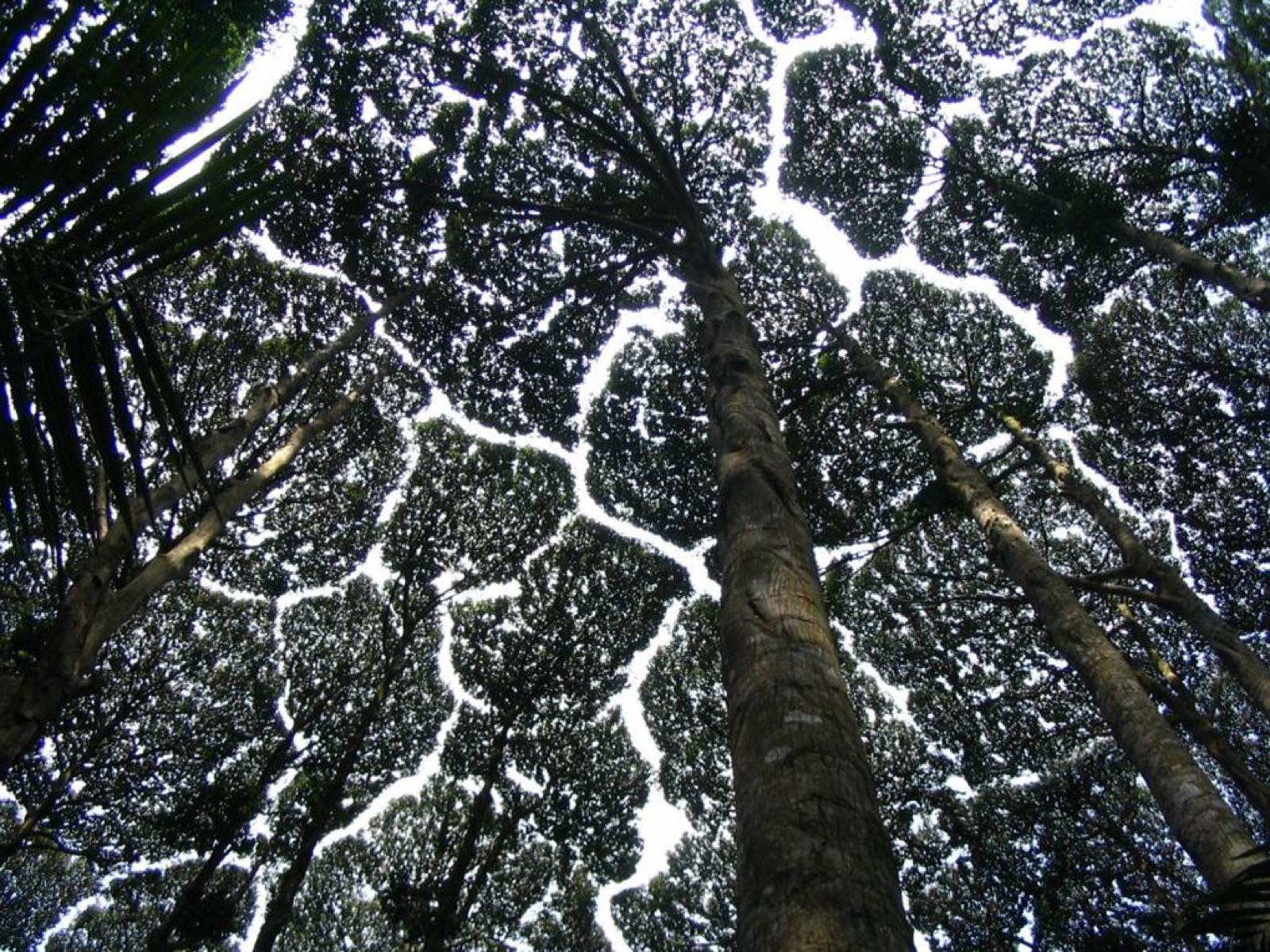
Gaharu
Aquilaria malaccensis
ENAgarwood, Eaglewood, Aloeswood
- MSGaharu
- IDGaharu
- ENAgarwood
Synonym: Agallochum malaccense (Lam.) Kuntze
Family: Thymelaeaceae
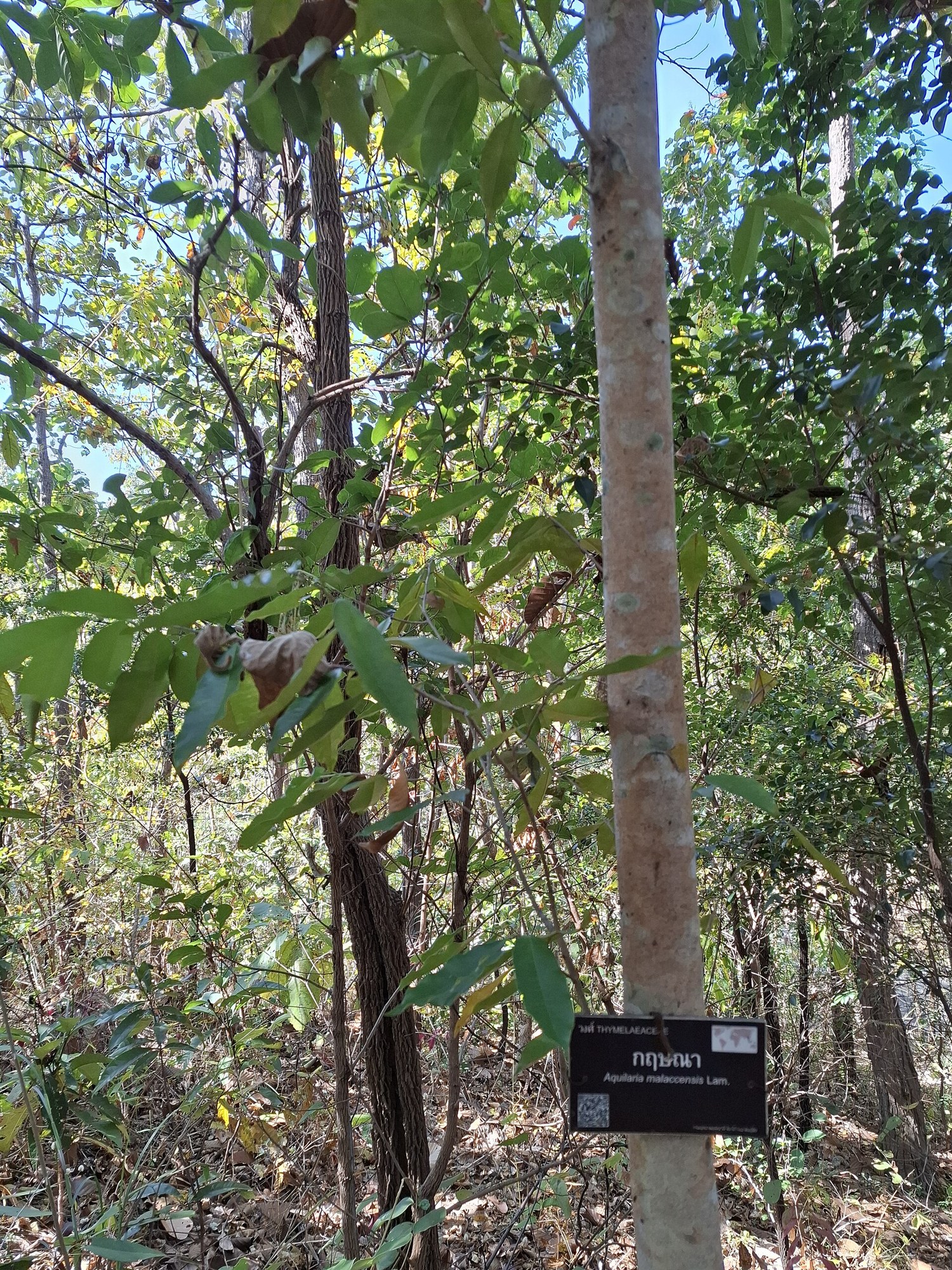
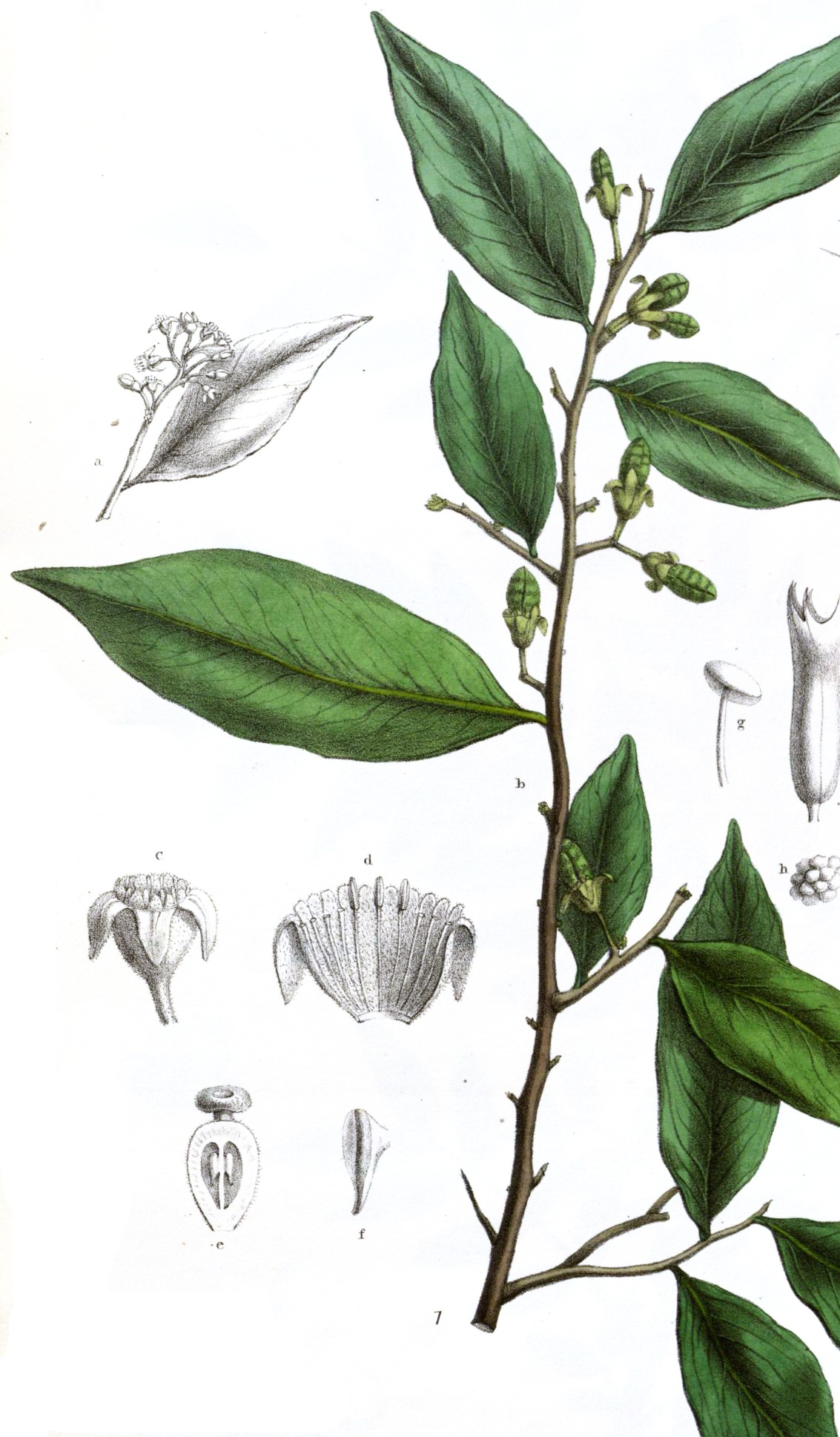
Gaharu is the dark, fragrant resin that forms in the wood of Aquilaria trees after injury and fungal infection. Traded for centuries as incense and perfume material, it comes from a tree now assessed as Critically Endangered in the wild and listed on CITES Appendix II.
- Parts used
- Resin wood, Essential oil
- Native range
- Native. Bangladesh to W. & C. Malesia (POWO/WCVP).
- Habitat
- Forest
- Scent profile
- Woody, Resinous, Balsamic, Smoky
- Conservation
- IUCN: Critically Endangered (A. malaccensis) · CITES: Appendix II
Traditional and heritage uses
Gaharu is not the wood of a healthy tree. The fragrant material forms when an Aquilaria trunk is wounded and infected by fungi, and the tree lays down resin in response; untouched trees carry little or none of it [2]. The resinous wood has been burned as incense since early times [3], and across Asia it is used in perfumery and in cultural and ceremonial practice [4].
Scent profile
- Woody Dry, deep wood at the base.
- Resinous Dense resin, darker when heated.
- Balsamic A warm, slightly sweet balsam edge.
- Smoky Smoke and char when burned as chips.
Trade history
Gaharu is a high-value product traded worldwide, primarily for its fragrance in incense and perfume [2]. Overharvesting of wild trees to meet that demand has made natural agarwood rare [2], and mass planting of Aquilaria with induced resin formation has become the main route to supply in several Asian countries [5].
Cautions and safety
Gaharu is used here as an incense and perfume material, not as food or medicine. Buy only material from plantations or with CITES documentation [6]. Consult a qualified professional before internal use.
This entry is for information only and is not medical advice.
Conservation
- IUCN
- Critically Endangered (A. malaccensis), 2018 [7]
- CITES
- Appendix II, 2026 [6]
Sources (7)
- POWO (2026). Aquilaria malaccensis Lam.. Plants of the World Online, Royal Botanic Gardens, Kew; distribution from the World Checklist of Vascular Plants. Accessed 18 October 2026. Source
- Shivanand P, Arbie NF, Krishnamoorthy S, et al. (2022). Agarwood-The Fragrant Molecules of a Wounded Tree. Molecules 27(11). Source
- Kristanti AN, Tanjung M, Aminah NS (2018). Review: Secondary Metabolites of Aquilaria, a Thymelaeaceae Genus. Mini Rev Org Chem 15(1): 36-55. Source
- Zhang X, Wang LX, Hao R, et al. (2024). Sesquiterpenoids in Agarwood: Biosynthesis, Microbial Induction, and Pharmacological Activities. J Agric Food Chem 72(42): 23039-23052. Source
- Tan CS, Isa NM, Ismail I, et al. (2019). Agarwood Induction: Current Developments and Future Perspectives. Front Plant Sci 10: 122. Source
- UNEP-WCMC (2026). Aquilaria malaccensis, CITES listing. Species+ database, compiled for the CITES Secretariat. Accessed 18 October 2026. Source
- Harvey-Brown Y (2018). Aquilaria malaccensis. The IUCN Red List of Threatened Species 2018: e.T32056A2810130. Source