Cekur
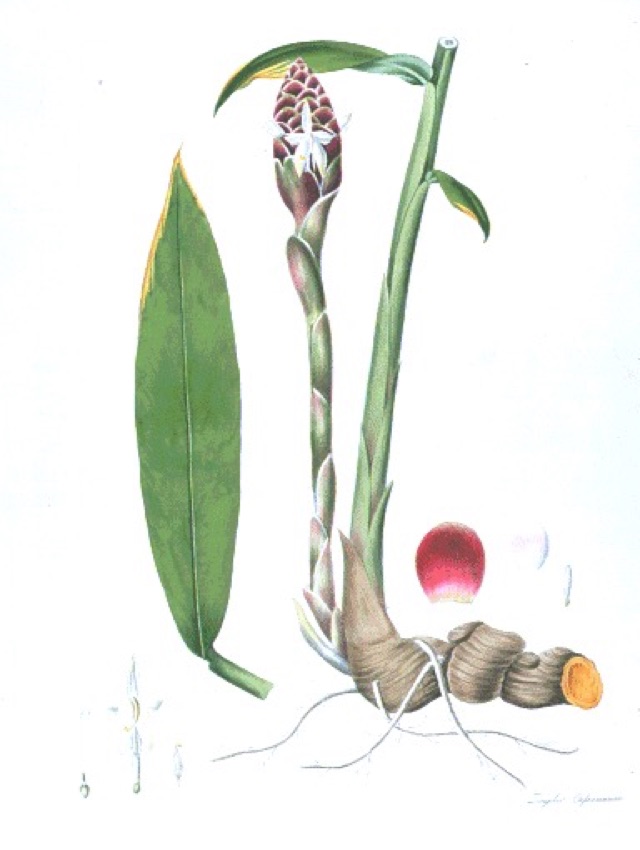
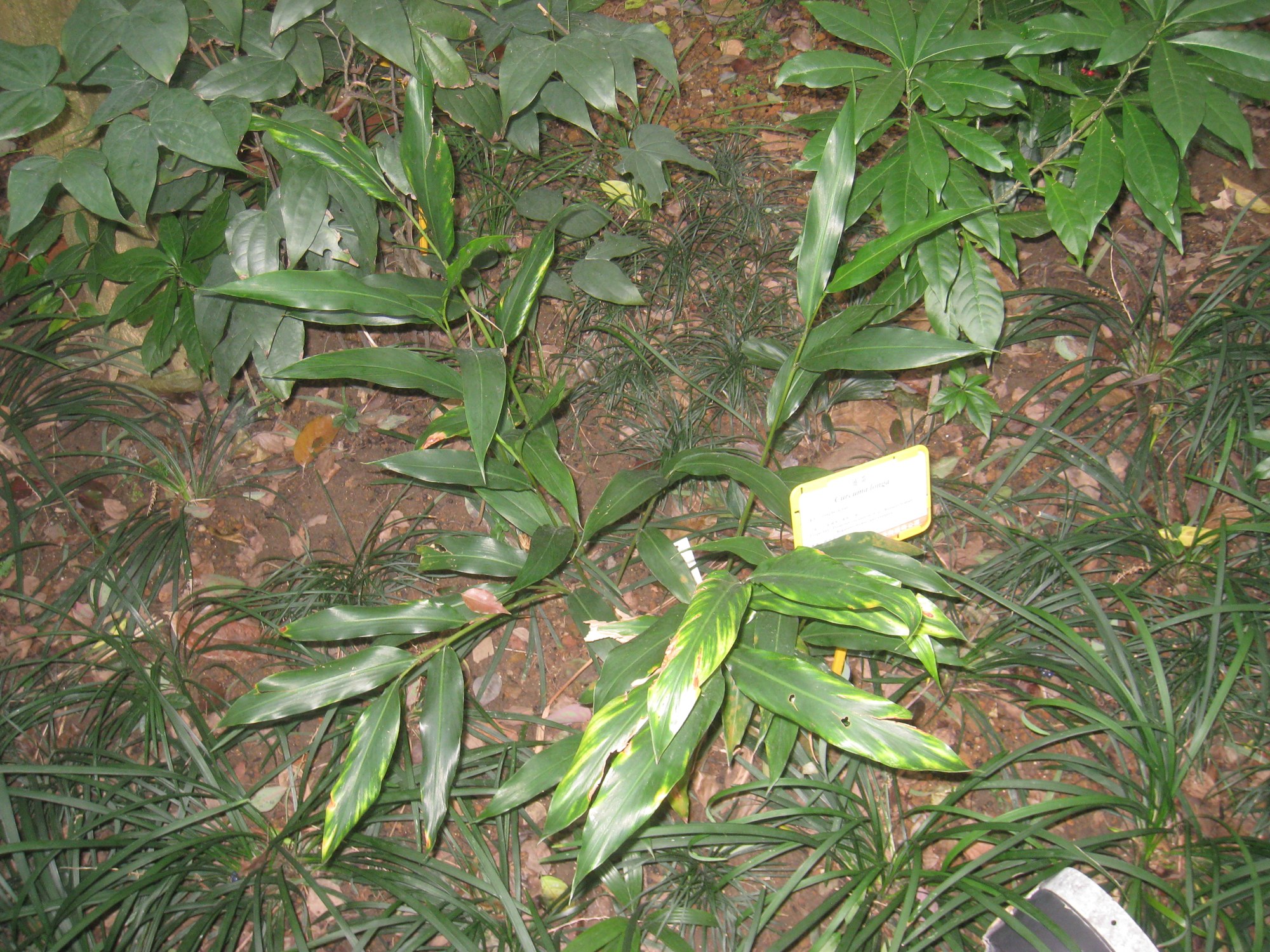
Kaempferia galanga
ENAromatic ginger, Sand ginger
- MSCekur
- JVKencur
- IDKencur
- ENSand ginger
Family: Zingiberaceae
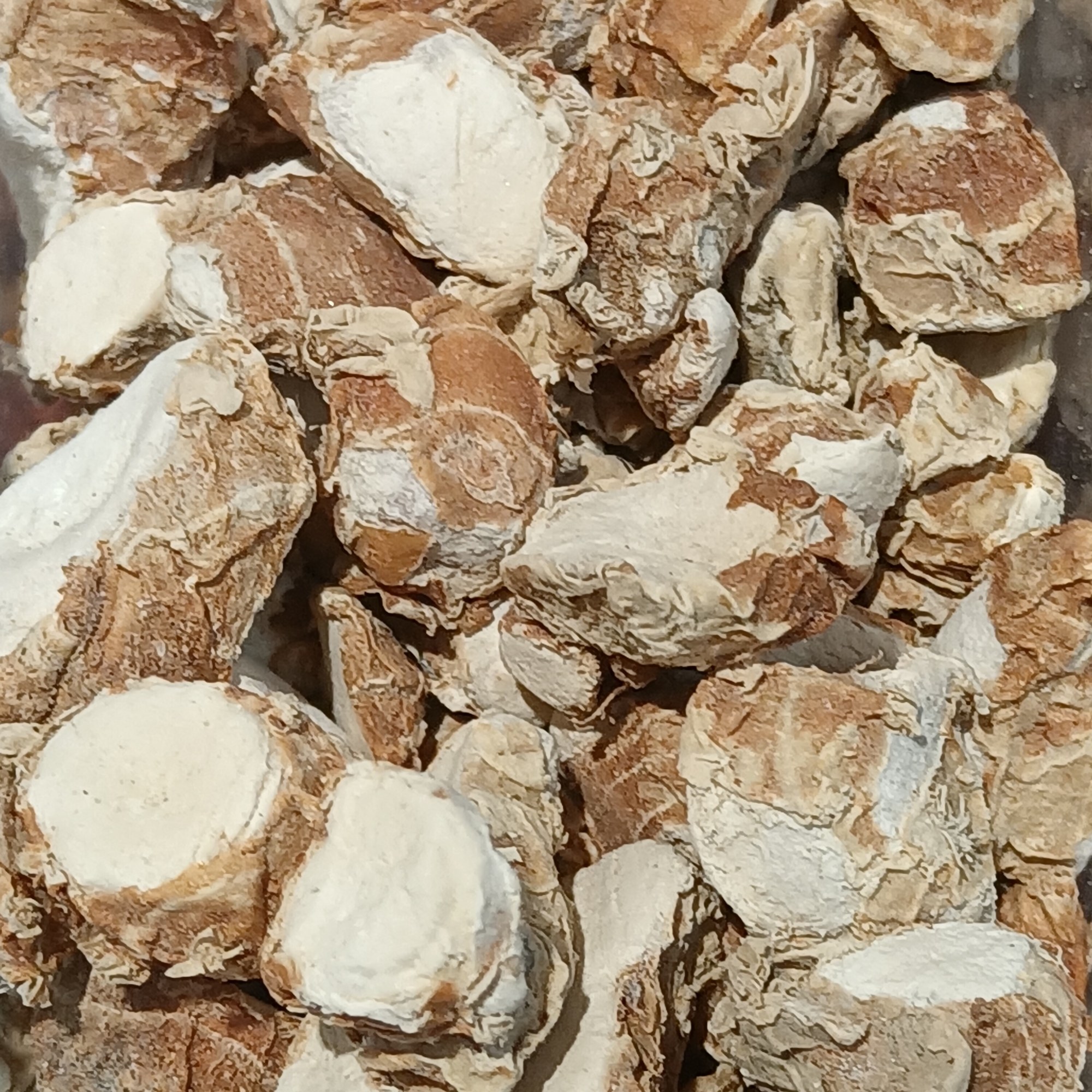
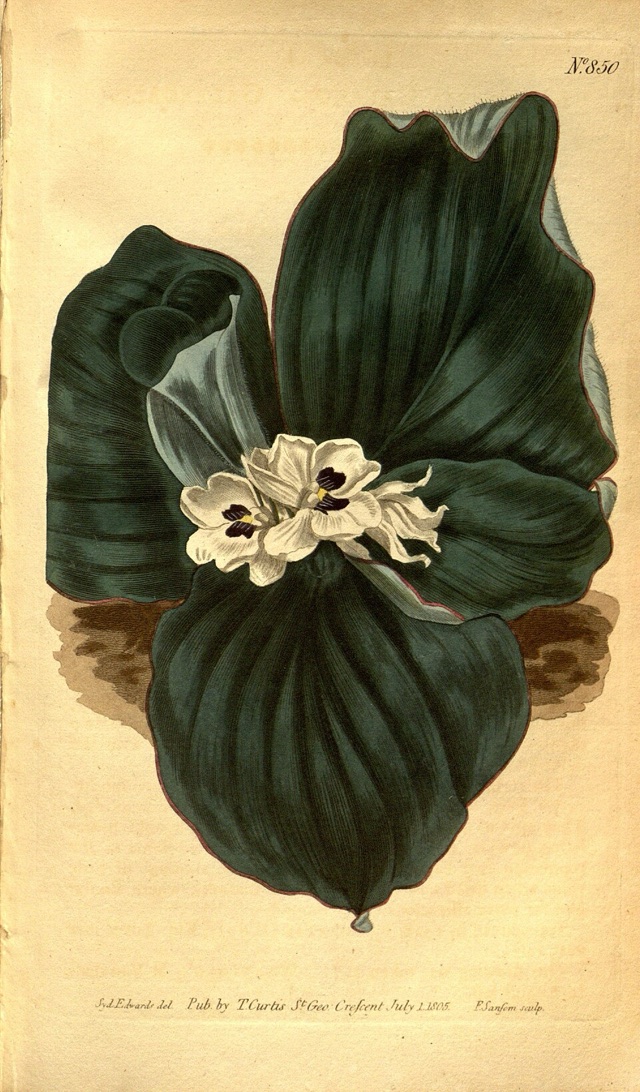
Cekur's use in balms and poultices rests on a deep traditional record and a genuinely interesting laboratory literature around ethyl p-methoxycinnamate; no peer-reviewed human trial of a topical cekur preparation could be verified, so the entry stays at C.
- Parts used
- Rhizome, Leaf
- Native range
- Introduced or naturalised. India to China (S. Yunnan) and Indo-China (POWO/WCVP).
- Habitat
- Kitchen
- Evidence grade
- C: Pre-clinical work or documented traditional use only
Traditional and heritage uses
Cekur, kencur across the Strait, is one of the small aromatic rhizomes
the Malay and Javanese traditions keep for warmed pastes and poultices [2, 4].
It is not a marginal plant in the written record. A transliteration and
analysis of the medical chapter of Tajul Muluk, a Malay manuscript
compiled by the Achehnese scholar Shaykh Isma'il al-'Asyi, catalogues 292
interventions across 56 illnesses drawn from 209 plant materials, and
cekur ranks fourth among the most-cited plants in it [1]. The practice it
serves is documented in the field as well as on the page: an
ethnobotanical study of Malay midwifery across five Kelantan localities
names cekur among the six species used in berparam, the herbal
paste applied to the limbs and body during postnatal confinement [2],
which is precisely the poultice tradition this entry concerns.
In the kitchen it earns its keep in its own right. Cekur is one of the
defining flavours of jamu beras kencur, the rice-and-kencur drink of
Javanese daily practice, documented alongside the other traditional herbal
drinks of the region [3] and within the wider jamu system [4]. The plant's
ethnomedicinal record across the region has been assembled at length [5].
What the evidence says
The honest starting point of most botanical literature, and of most of our library.
What the grades mean- VIISystematic reviewGrade A
- VIClinical studiesGrade A–B
- VHuman observationalGrade B–C
- IVPreclinicalGrade C
- IIILaboratoryGrade C
- IIPhytochemicalGrade C
- ITraditional useGrade C
The ladder explains the grade; it never replaces it. Evidence for this plant reaches preclinical, which is why the entry is graded C.
Cautions and safety
Kanjanapothi and colleagues (2004) found no deaths at oral doses up to
5,000 mg/kg in rats, an unremarkable 28-day subacute study, and no dermal
irritation from the hexane fraction in rabbits [8]: the last point
directly relevant to balm and poultice use. Human sensitisation data with
repeated dermal use are lacking; patch-test before first use and stop if
irritation develops. As with the other aromatic rhizomes, concentrated
extracts in pregnancy deserve professional advice despite the traditional
postpartum record.
More recent work adds a direct dermal-safety result rather than an
inference: a 2024 study pairing mechanism work on inflammation with formal
irritation testing reported no irritation of the chick chorioallantoic
membrane or of albino rabbit skin [9]. Taken with the earlier rabbit
finding, that is two independent irritation results pointing the same way:
useful, though neither is a test of repeated human use.
This entry records documented traditional use. This is not medical advice; speak to a qualified practitioner.
Sources (18)
- Elfahmi, Woerdenbag HJ, Kayser O (2014). Jamu: Indonesian traditional herbal medicine towards rational phytopharmacological use. Journal of Herbal Medicine 4(2): 51–73. Source
- Wang S-Y, et al. (2021). Kaempferia galanga L.: progresses in phytochemistry, pharmacology, toxicology and ethnomedicinal uses. Frontiers in Pharmacology 12: 675350. Source
- Umar MI, Asmawi MZ, Sadikun A, et al. (2012). Bioactivity-guided isolation of ethyl-p-methoxycinnamate, an anti-inflammatory constituent, from Kaempferia galanga L. extracts. Molecules 17(7): 8720–8734. Source
- Umar MI, et al. (2014). Ethyl-p-methoxycinnamate isolated from Kaempferia galanga inhibits inflammation by suppressing interleukin-1, tumor necrosis factor-α, and angiogenesis by blocking endothelial functions. Clinics (São Paulo) 69(2): 134–144. Source
- Othman R, et al. (2006). Bioassay-guided isolation of a vasorelaxant active compound from Kaempferia galanga L. Phytomedicine 13(1–2): 61–66. Source
- Ridtitid W, Sae-Wong C, Reanmongkol W, Wongnawa M (2008). Antinociceptive activity of the methanolic extract of Kaempferia galanga Linn. in experimental animals. Journal of Ethnopharmacology 118(2): 225–230. Source
- Wahyuni IS, Sufiawati I, et al. (2022). Anti-inflammatory activity and wound healing effect of Kaempferia galanga L. rhizome on the chemical-induced oral mucosal ulcer in Wistar rats. Journal of Inflammation Research 15: 2281–2294. Source
- Kanjanapothi D, et al. (2004). Toxicity of crude rhizome extract of Kaempferia galanga L. (Proh Hom). Journal of Ethnopharmacology 90(2–3): 359–365. Source
- Mohd Shafri MA, Nazarudin AN (2022). Tajul Muluk: a traditional Malay text of ethnobotany and ethnomedicine. Borneo Journal of Resource Science and Technology 12(2): 74–81. Source
- Othman R, Khiruddin SA (2018). Landscape ethnobotanical study of Malay midwifery plant species: case study of Kelantan. Journal of Architecture, Planning & Construction Management 8(1): 47–54. Source
- Estiasih T, Maligan JM, Witoyo JE, et al. (2025). Indonesian traditional herbal drinks: diversity, processing, and health benefits. Journal of Ethnic Foods 12(1): 7. Source
- Nurhaslina CR, Mustapa AN, Mohd Azizi CY (2023). Kaempferia galanga Linn: a systematic review of phytochemistry, extraction technique, and pharmacological activities. ASM Science Journal 18: 1–12. Source
- Kumar A (2020). Phytochemistry, pharmacological activities and uses of traditional medicinal plant Kaempferia galanga L.: an overview. Journal of Ethnopharmacology 253: 112667. Source
- Wong KC, Ong KS, Lim CL (1992). Composition of the essential oil of rhizomes of Kaempferia galanga L. Flavour and Fragrance Journal 7(5): 263–266. Source
- Muchtaridi M, Abdullah DA, Suhandi C, Sumiwi SA, Khairul Ikram NK (2022). Anti-inflammatory activity of Alpinia malaccensis (Burm. f.) Roscoe and Kaempferia galanga L. rhizome essential oil gel formulations by carrageenan induction method. Sains Malaysiana 51(5): 1411–1424. Source
- Wahyuni IS, Diina TR, Salsabila AS, et al. (2024). Kaempferia galanga L. alleviates the expression of COX-2 and NF-kappaB-p65 in the oral mucosa ulcer of Wistar rats and exhibits no irritation toward the vascular membrane of chicken eggs and the skin of albino rabbits. Heliyon 10(16): e35827. Source
- Sudsai T, Tungcharoen P, Tewtrakul S (2022). Wound healing properties of pharmaceutical gel containing isopimarane diterpene isolated from Kaempferia galanga L. Journal of Ethnopharmacology 289: 115052. Source
- Tungcharoen P, Wattanapiromsakul C, Tansakul P, Nakamura S, Matsuda H, Tewtrakul S (2020). Anti-inflammatory effect of isopimarane diterpenoids from Kaempferia galanga. Phytotherapy Research 34(3): 612–623. Source