Lavender
Lavandula angustifolia
ENLavender, English lavender, True lavender
- MSLavender [7]
- IDLavender
- ENLavender
Synonyms: Lavandula officinalis Chaix, Lavandula spica L.
Family: Lamiaceae
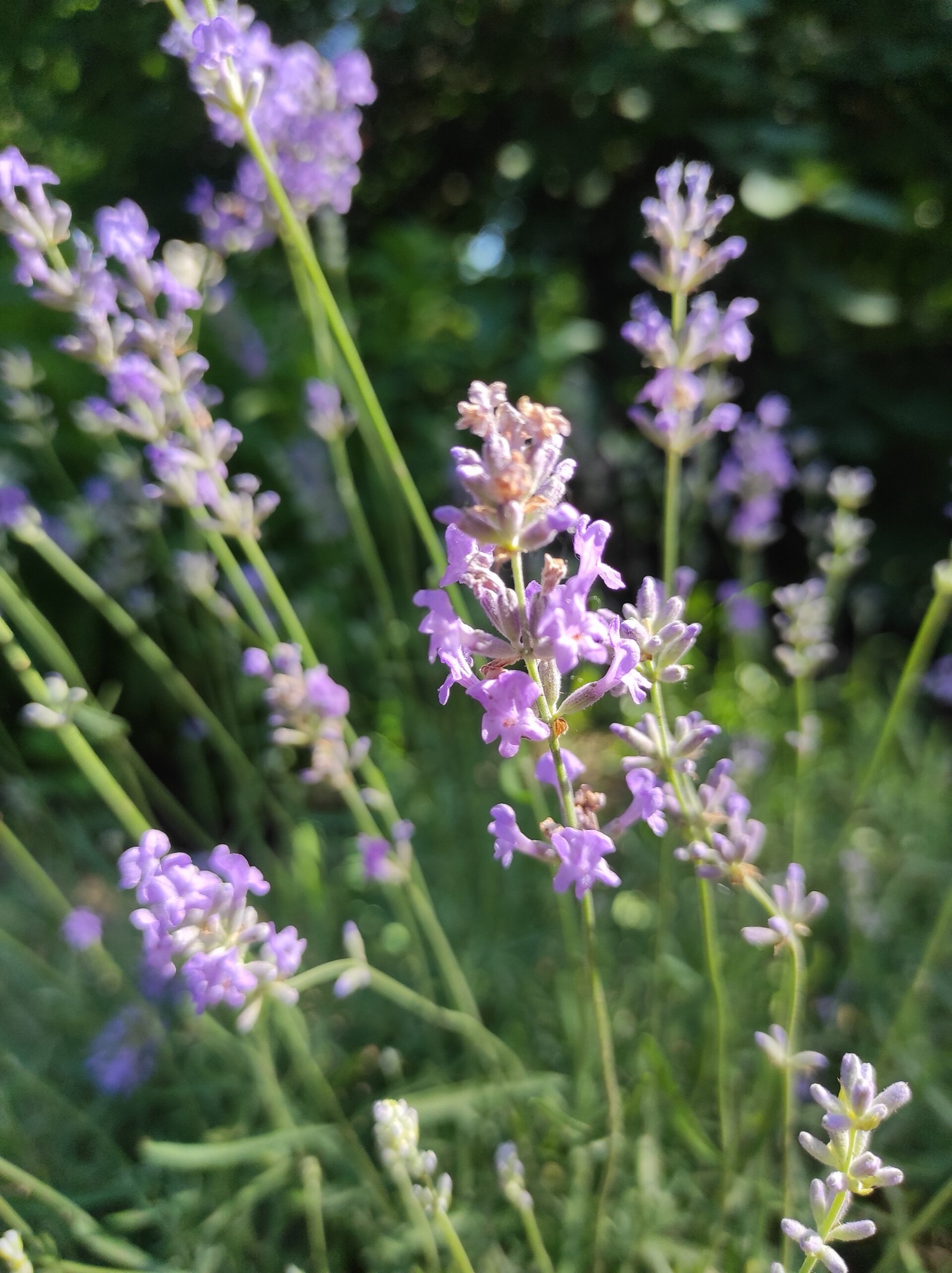
Lavender, Lavandula angustifolia, is a shrubby aromatic of the mint family whose flower spikes are steam-distilled into a floral, herbal oil. It is native to France, Italy and Spain, and sits in this dictionary as a scent plant from outside the archipelago.
- Parts used
- Flower, Essential oil
- Native range
- Introduced or naturalised. France, Italy, Spain (WCVP).
- Habitat
- Garden
- Scent profile
- Floral, Herbal, Green, Camphoraceous
Traditional and heritage uses
Lavender is a shrubby member of the mint family, Lamiaceae. Its name, Lavandula angustifolia, was published by Philip Miller in 1768, and the World Checklist of Vascular Plants records it as native to France, Italy and Spain and introduced across much of the rest of its listed range [1, 2]. The botanical origin of the plant and the uses of the plant and its oil are reviewed in the dermatology literature on essential oils [3].
Botanists have kept revising what the name covers. A 2017 review of species boundaries in the group raised the plants of the Pyrenees to species rank [6].
Scent profile
- Floral Clean flower-head sweetness.
- Herbal Dry, leafy herb.
- Green Cut stems and leaf.
- Camphoraceous A cool, clear edge from camphor.
Trade history
Lavender oil comes from the flowering spikes. In a laboratory study of Lavandula angustifolia flower heads, steam distillation gave an oil yield of 2.21 percent, and linalool, linalyl acetate and camphor were among the compounds measured [4]. An extract made with edible ethanol held more linalool, linalyl acetate and lavandulyl acetate than the steam-distilled oil, while the oil held a higher share of linalool and camphor [4].
Cautions and safety
Contact allergy to lavender oil, and allergic contact dermatitis from it, are described in the dermatology literature [3]. A 2007 report followed three boys who developed enlarged breast tissue while using skin products that contained lavender and tea tree oils; it resolved after they stopped, tests on human cell lines found hormone-like activity in both oils, and the authors concluded that repeated skin exposure probably caused it [5]. Consult a qualified professional before internal use.
This entry is for information only and is not medical advice.
Sources (7)
- WCVP (2026). Lavandula angustifolia Mill. World Checklist of Vascular Plants, Royal Botanic Gardens, Kew; accepted name, native range and synonymy as served by the GBIF Backbone dataset (species 207253743). Accessed 12 November 2026. Source
- IPNI (2026). Lavandula angustifolia Mill. International Plant Names Index. Accessed 12 November 2026. Source
- de Groot A, Schmidt E (2016). Essential Oils, Part V: Peppermint Oil, Lavender Oil, and Lemongrass Oil. Dermatitis 27(6): 325-332. Source
- Guo X, Wang P (2020). Aroma Characteristics of Lavender Extract and Essential Oil from Lavandula angustifolia Mill. Molecules 25(23): 5541. Source
- Henley DV, Lipson N, Korach KS, Bloch CA (2007). Prepubertal gynecomastia linked to lavender and tea tree oils. N Engl J Med 356(5): 479-485. Source
- Passalacqua NG, Tundis R, Upson TM (2017). A new species of Lavandula sect. Lavandula (Lamiaceae) and review of species boundaries in Lavandula angustifolia. Phytotaxa 292(2): 161-170. Source
- Dewan Bahasa dan Pustaka (n.d.). lavender. Kamus Dewan Edisi Keempat. Pusat Rujukan Persuratan Melayu. Source