Cendana
Santalum album
ENSandalwood, East Indian sandalwood
- MSCendana
- IDCendana
- ENSandalwood
Synonyms: Santalum myrtifolium (L.) Roxb., Sirium myrtifolium L.
Family: Santalaceae
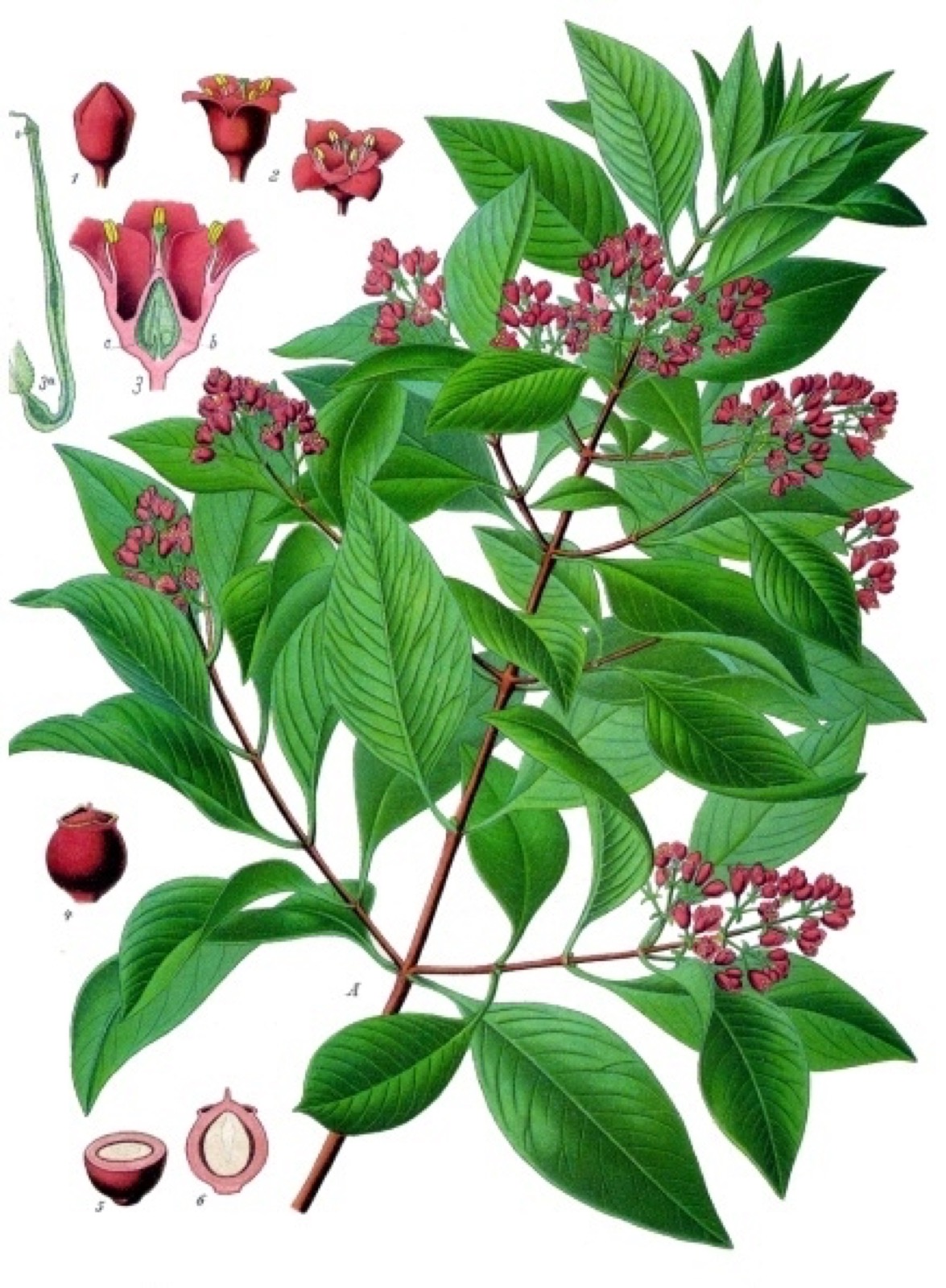
Cendana is sandalwood, the fragrant heartwood of Santalum album, a tree native from Java and the Lesser Sunda Islands to northern Australia. The wood and its oil are used in perfume, incense and cosmetics, and sandalwood oil is also an approved flavour ingredient.
- Parts used
- Resin wood, Essential oil
- Native range
- Native. Jawa to N. Australia (POWO/WCVP).
- Habitat
- Garden
- Scent profile
- Woody, Sweet, Balsamic
Traditional and heritage uses
Sandalwood is a fragrant wood from which an oil is derived for use in food and cosmetics [2]. The tree is native from Java and the Lesser Sunda Islands to northern Australia [1], which places the Nusantara at the heart of its history.
Scent profile
- Woody Soft, creamy wood.
- Sweet Milky sweetness.
- Balsamic A warm, lasting base.
Beauty and grooming traditions
Sandalwood oil is used in cosmetics [2]. A safety assessment found low acute oral and dermal toxicity for the oil and its main constituent in laboratory animals [2].
Trade history
The value of the tree lies in its heartwood, and growers study how to bring young trees into heartwood and oil production sooner [3].
Cautions and safety
Sandalwood oil has low acute toxicity in laboratory testing and is permitted as a flavouring at very small intakes [2]. Contact allergy to sandalwood oil is recorded [4]. Cell and animal studies of the oil [5] do not show effects in people.
This entry is for information only and is not medical advice.
Sources (5)
- POWO (2026). Santalum album L.. Plants of the World Online, Royal Botanic Gardens, Kew; distribution from the World Checklist of Vascular Plants. Accessed 18 October 2026. Source
- Burdock GA, Carabin IG (2008). Safety assessment of sandalwood oil (Santalum album L.). Food Chem Toxicol 46(2): 421-32. Source
- Li Y, Zhang X, Cheng Q, et al. (2021). Elicitors Modulate Young Sandalwood (Santalum album L.) Growth, Heartwood Formation, and Concrete Oil Synthesis. Plants (Basel) 10(2). Source
- de Groot AC, Schmidt E (2017). Essential Oils, Part VI: Sandalwood Oil, Ylang-Ylang Oil, and Jasmine Absolute. Dermatitis 28(1): 14-21. Source
- Santha S, Dwivedi C (2015). Anticancer Effects of Sandalwood (Santalum album). Anticancer Res 35(6): 3137-45. Source