Bunga raya
Hibiscus rosa-sinensis
ENChinese hibiscus, Shoeblack plant
- MSBunga raya
- IDKembang sepatu
- ENHibiscus
Family: Malvaceae
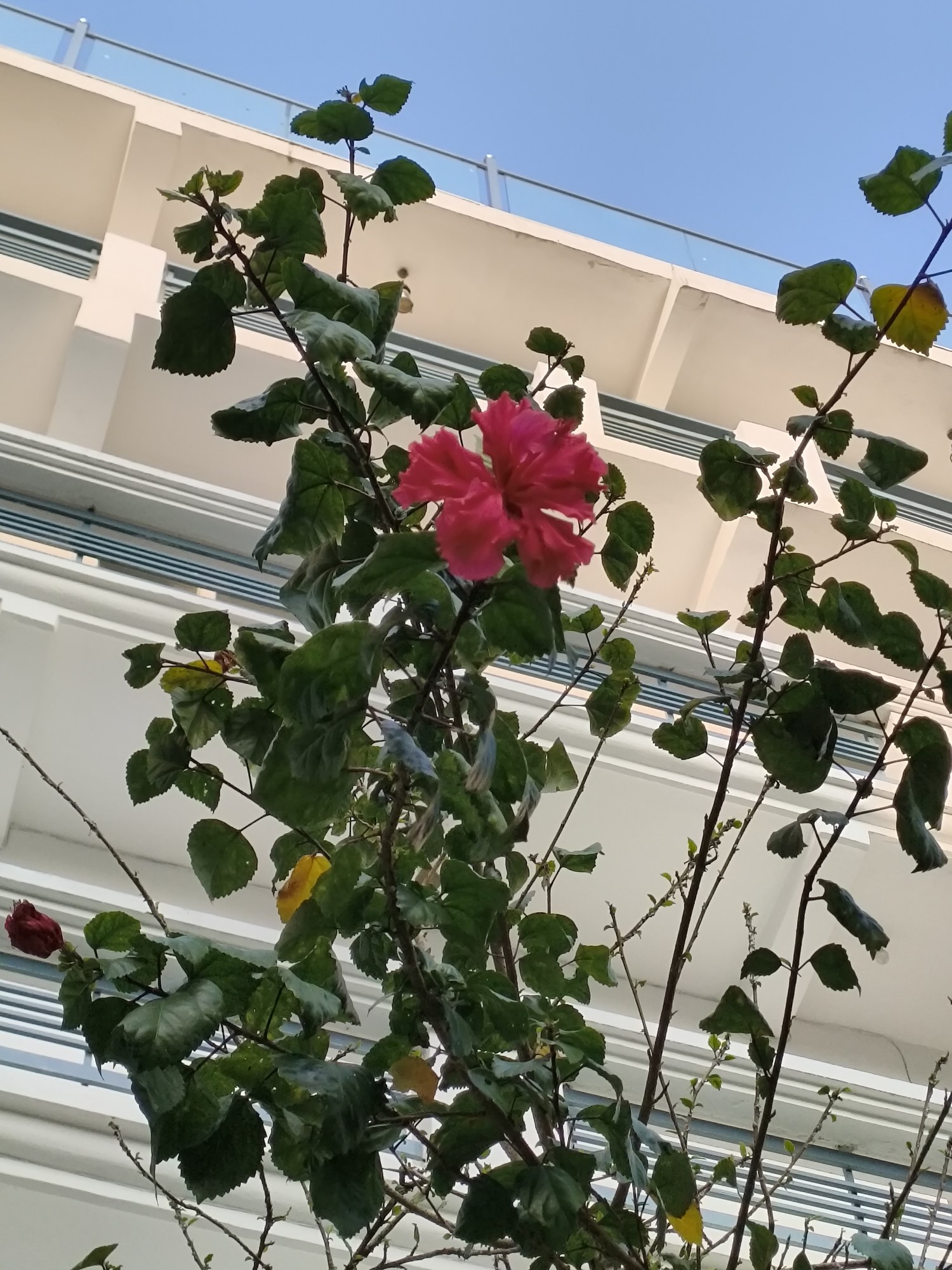
Bunga raya, the red hibiscus, is Malaysia's national flower and a fixture of gardens and hedges. Botanists regard it as a cultigen of hybrid origin, and it has a long record in traditional practice.
- Parts used
- Flower, Leaf
- Native range
- Introduced or naturalised. as a cultigen derived from artificial hybrids in the S. Pacific (POWO/WCVP).
- Habitat
- Garden
Traditional and heritage uses
POWO describes Hibiscus rosa-sinensis as a cultigen derived from artificial hybrids in the South Pacific [1]. The plant has been widely used in traditional medicine [2]. It was declared Malaysia's national flower on 28 July 1960 [3].
Beauty and grooming traditions
The flower has been explored for food and personal-care uses as well as in medicine [4].
Cautions and safety
The flowers are used as an ornamental and in drinks. Animal studies of extracts [4] are not evidence of effects in people. A leaf extract prevented embryo implantation in pregnant mice [5], so concentrated extracts are best avoided in pregnancy.
This entry is for information only and is not medical advice.
Sources (5)
- POWO (2026). Hibiscus rosa-sinensis L.. Plants of the World Online, Royal Botanic Gardens, Kew; distribution from the World Checklist of Vascular Plants. Accessed 18 October 2026. Source
- Amtaghri S, Qabouche A, Slaoui M, et al. (2024). A Comprehensive Overview of Hibiscus rosa-sinensis L.: Its Ethnobotanical Uses, Phytochemistry, Therapeutic Uses, Pharmacological Activities, and Toxicology. Endocr Metab Immune Disord Drug Targets 24(1): 86-115. Source
- Government of Malaysia (n.d.). National flower. MyGovernment, the Government of Malaysia official portal. Source
- Raza H, Sultan MT, Ahmad K, et al. (2025). Hibiscus rosa-sinensis: A Multifunctional Flower Bridging Nutrition, Medicine, and Molecular Therapeutics. Food Sci Nutr 13(12): e71254. Source
- Nivsarkar M, Patel M, Padh H, et al. (2005). Blastocyst implantation failure in mice due to "nonreceptive endometrium": endometrial alterations by Hibiscus rosa-sinensis leaf extract. Contraception 71(3): 227-30. Source