Melur
Jasminum sambac
ENArabian jasmine, Sambac jasmine
- MSMelur
- IDMelati
- JVMelati
- ENArabian jasmine
Family: Oleaceae
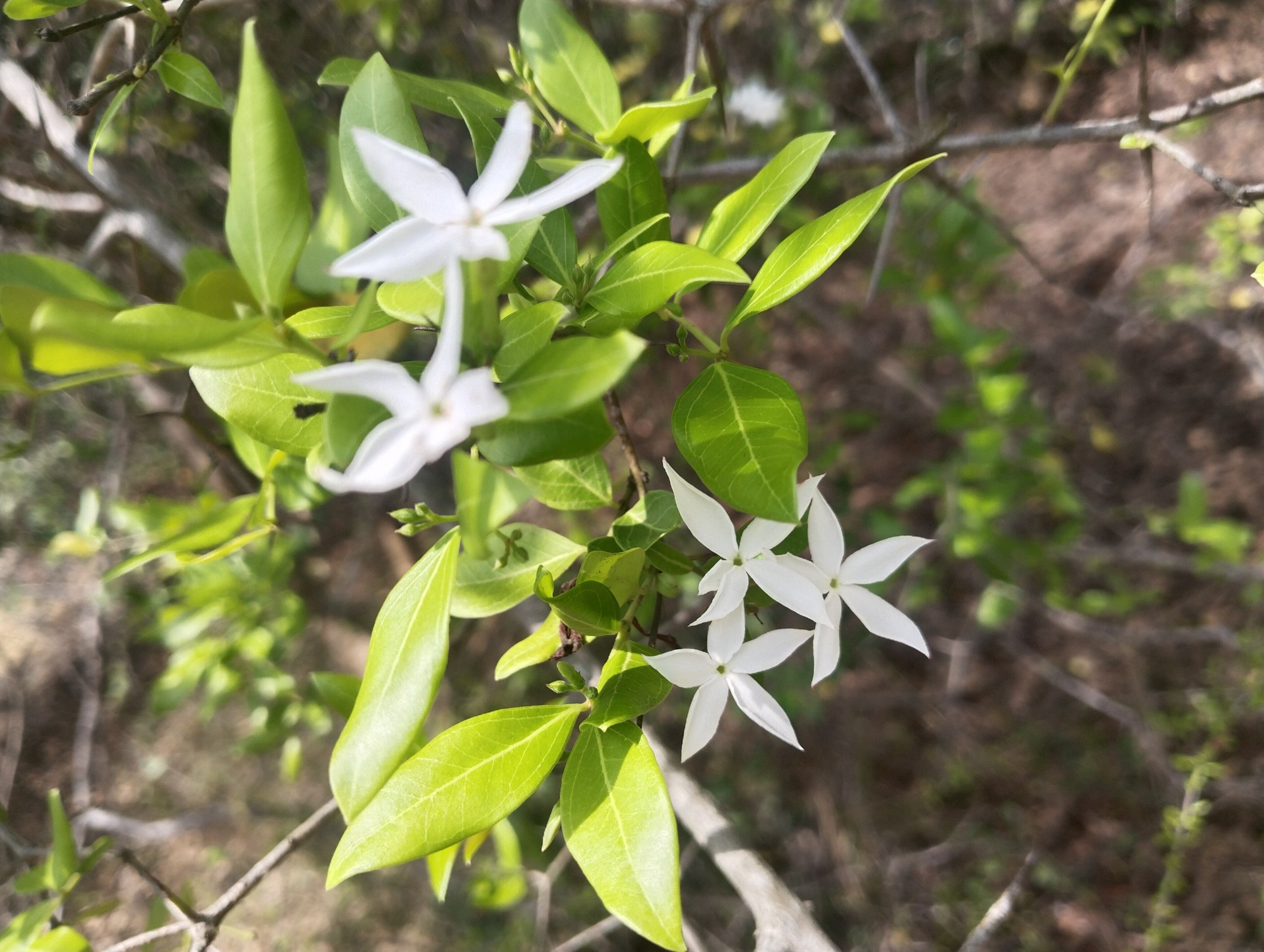
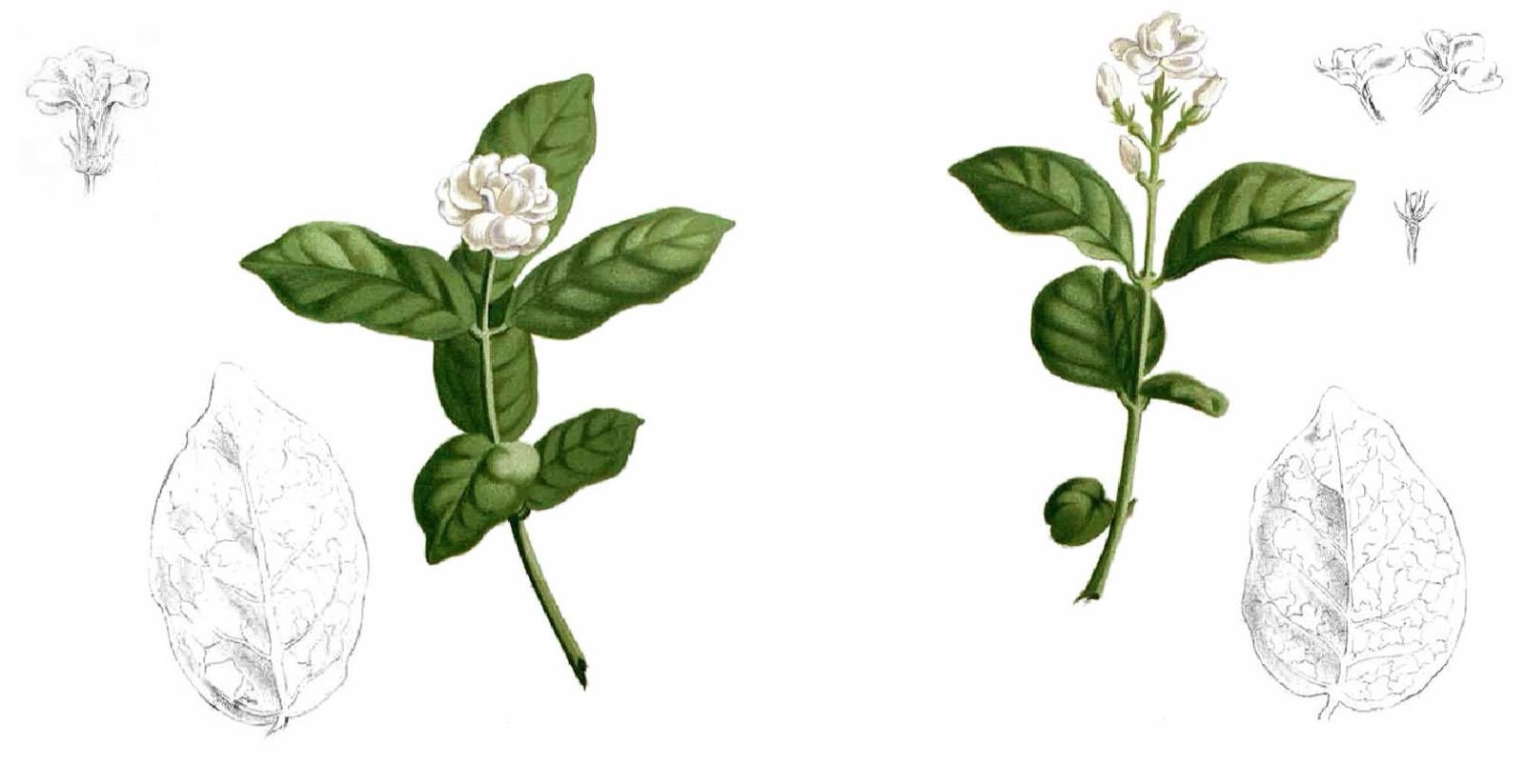
Melur, called melati in Indonesia, is the small, intensely scented white jasmine of Nusantara gardens. Introduced long ago from South Asia, it is used to scent tea and garlands, and its floral notes are well studied.
- Parts used
- Flower
- Native range
- Introduced or naturalised. Bhutan to India (POWO/WCVP).
- Habitat
- Garden
- Scent profile
- Floral, Sweet, Green
Traditional and heritage uses
Jasminum sambac is native to South Asia, from Bhutan to India, and is recorded as introduced in Java [1]. It grows across tropical South and Southeast Asia and has a documented place in traditional practice [2].
Scent profile
- Floral Intense white-flower scent.
- Sweet Honeyed sweetness.
- Green A fresh green edge from the petals.
In the kitchen
Fresh jasmine flowers are used to scent jasmine tea, and the timing of picking matters for the scent they release [3].
Cautions and safety
Contact allergy to jasmine absolute is recorded [4]. Consult a qualified professional before internal use.
This entry is for information only and is not medical advice.
Sources (4)
- POWO (2026). Jasminum sambac (L.) Aiton. Plants of the World Online, Royal Botanic Gardens, Kew; distribution from the World Checklist of Vascular Plants. Accessed 18 October 2026. Source
- Wang H, Li K, Li D, et al. (2026). Jasminum sambac: Progress in research on ethnopharmacology, phytochemistry, pharmacological actions and other applications. J Ethnopharmacol 354: 120478. Source
- Yu Y, Lyu S, Chen D, et al. (2017). Volatiles Emitted at Different Flowering Stages of Jasminum sambac and Expression of Genes Related to α-Farnesene Biosynthesis. Molecules 22(4). Source
- de Groot AC, Schmidt E (2017). Essential Oils, Part VI: Sandalwood Oil, Ylang-Ylang Oil, and Jasmine Absolute. Dermatitis 28(1): 14-21. Source