Kemenyan
Styrax benzoin
ENBenzoin, Sumatra benzoin, Gum benjamin
- MSKemenyan
- IDKemenyan
- BTKHaminjon
- ENBenzoin
Synonym: Lithocarpus benzoin (Dryand.) Royle
Family: Styracaceae
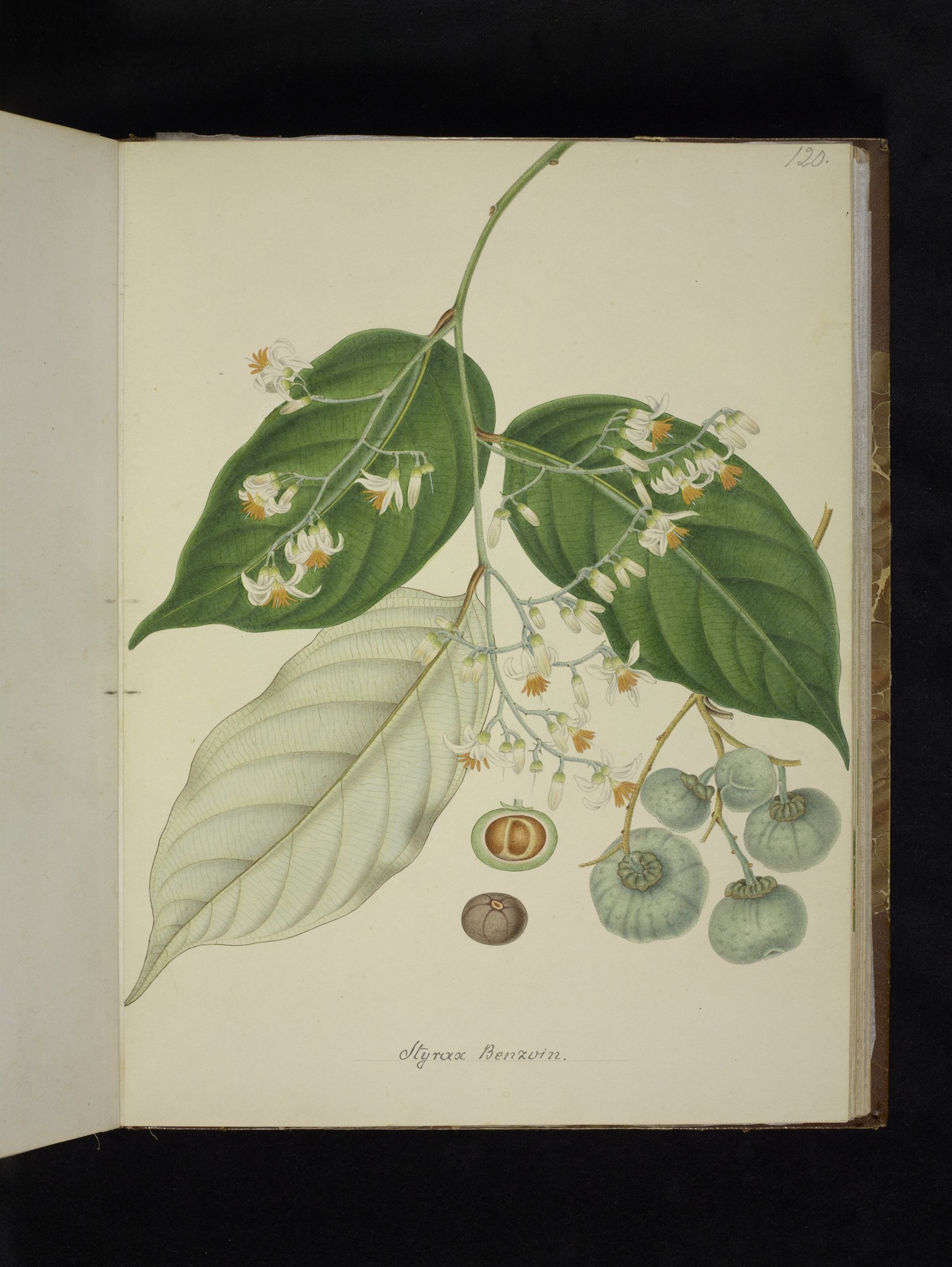
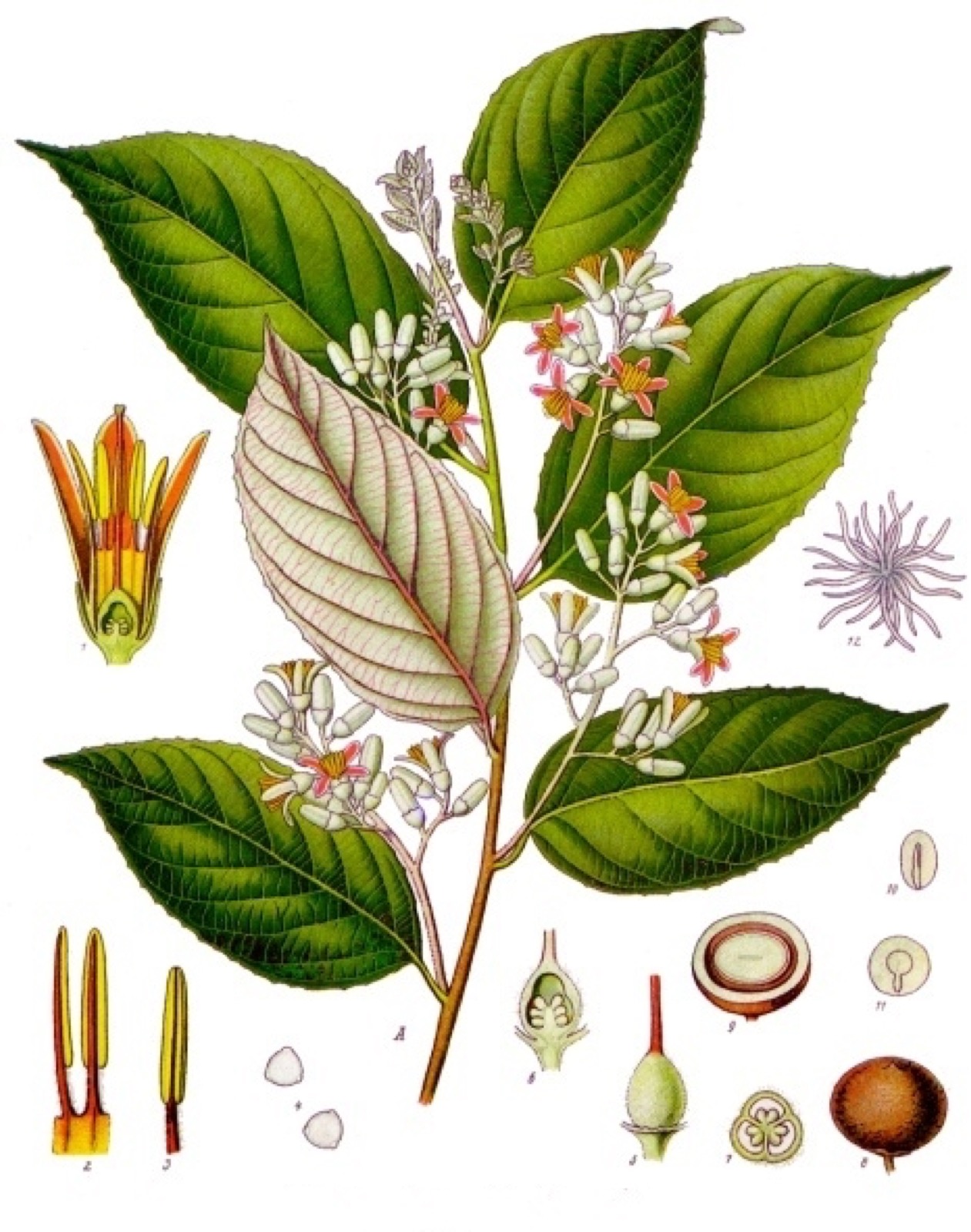
Kemenyan is benzoin, the fragrant resin tapped from Styrax trees. It is burned as incense in ritual and ceremony and valued as a fragrance and flavour material, and the tree is native to Sumatra, Java and Peninsular Malaysia.
- Parts used
- Resin wood
- Native range
- Native. Bangladesh to W. & C. Malesia (POWO/WCVP).
- Habitat
- Forest
- Scent profile
- Balsamic, Sweet, Resinous, Smoky
Traditional and heritage uses
Benzoin resin is secreted by resin ducts that form in the wood after the bark is injured [2]. It has a long history as incense, burned alongside olibanum, and as a flavour material and fragrance ingredient [2].
Scent profile
- Balsamic Rich balsam with a vanilla-like sweetness.
- Sweet Warm and powdery.
- Resinous Dense resin when heated.
- Smoky Soft smoke when burned.
Rituals and ceremony
Benzoin smoke has a spiritual role from ancient times and is used in religious ceremonies [3]. The oleo-resin of Styrax has a long tradition of use as incense [4].
Trade history
Siam and Sumatra benzoins are distinct resins from different Styrax species, and analytical chemistry can tell them apart [5]. The tree is native from Bangladesh through western and central Malesia, including Sumatra, Java and Peninsular Malaysia [1].
Cautions and safety
Compound tincture of benzoin was a common positive reaction in a large patch-test series, though few patients recalled exposure [6]. Consult a qualified professional before internal use.
This entry is for information only and is not medical advice.
Sources (6)
- POWO (2026). Styrax benzoin Dryand.. Plants of the World Online, Royal Botanic Gardens, Kew; distribution from the World Checklist of Vascular Plants. Accessed 18 October 2026. Source
- He Q, Sun Y, Chen X, et al. (2023). Benzoin Resin: An Overview on Its Production Process, Phytochemistry, Traditional Use and Quality Control. Plants (Basel) 12(10). Source
- Debnath S, Nath M, Sarkar A, et al. (2024). Phytochemical characterization of Styrax benzoin resin extract, molecular docking, ADME, and antibacterial activity study. Nat Prod Res 38(7): 1263-1268. Source
- Paparella A, Serio A, Shaltiel-Harpaz L, et al. (2025). Styrax spp.: Habitat, Phenology, Phytochemicals, Biological Activity and Applications. Plants (Basel) 14(5). Source
- Hovaneissian M, Archier P, Mathe C, et al. (2008). Analytical investigation of styrax and benzoin balsams by HPLC- PAD-fluorimetry and GC-MS. Phytochem Anal 19(4): 301-10. Source
- Scardamaglia L, Nixon R, Fewings J (2003). Compound tincture of benzoin: a common contact allergen?. Australas J Dermatol 44(3): 180-4. Source