Kepayang
Pangium edule
ENFootball fruit, Pangi
- MSKepayang
- MSKeluak
- IDKluwak
- ENPangi
Synonym: Hydnocarpus edulis (Reinw.) Peterm.
Family: Achariaceae
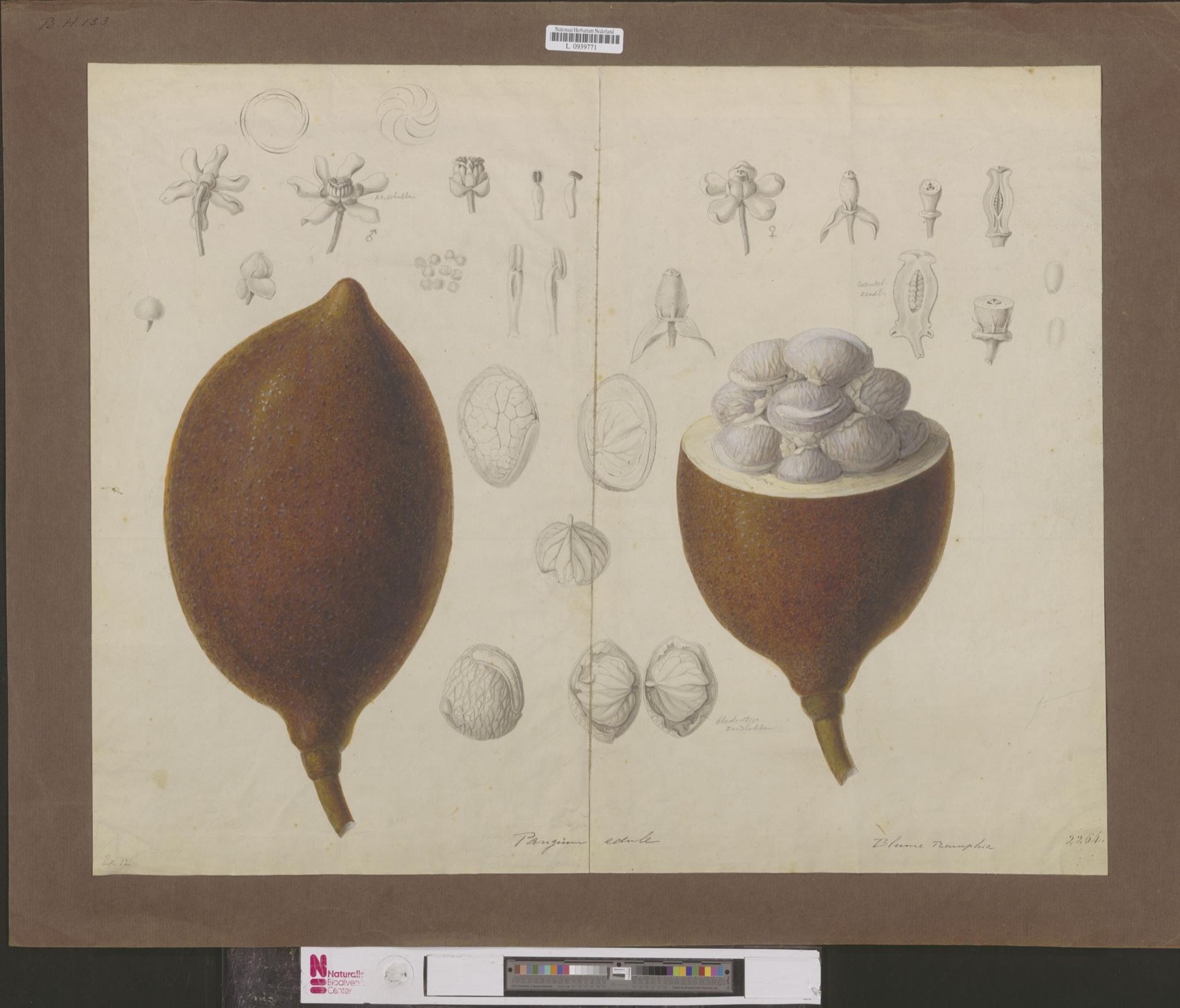
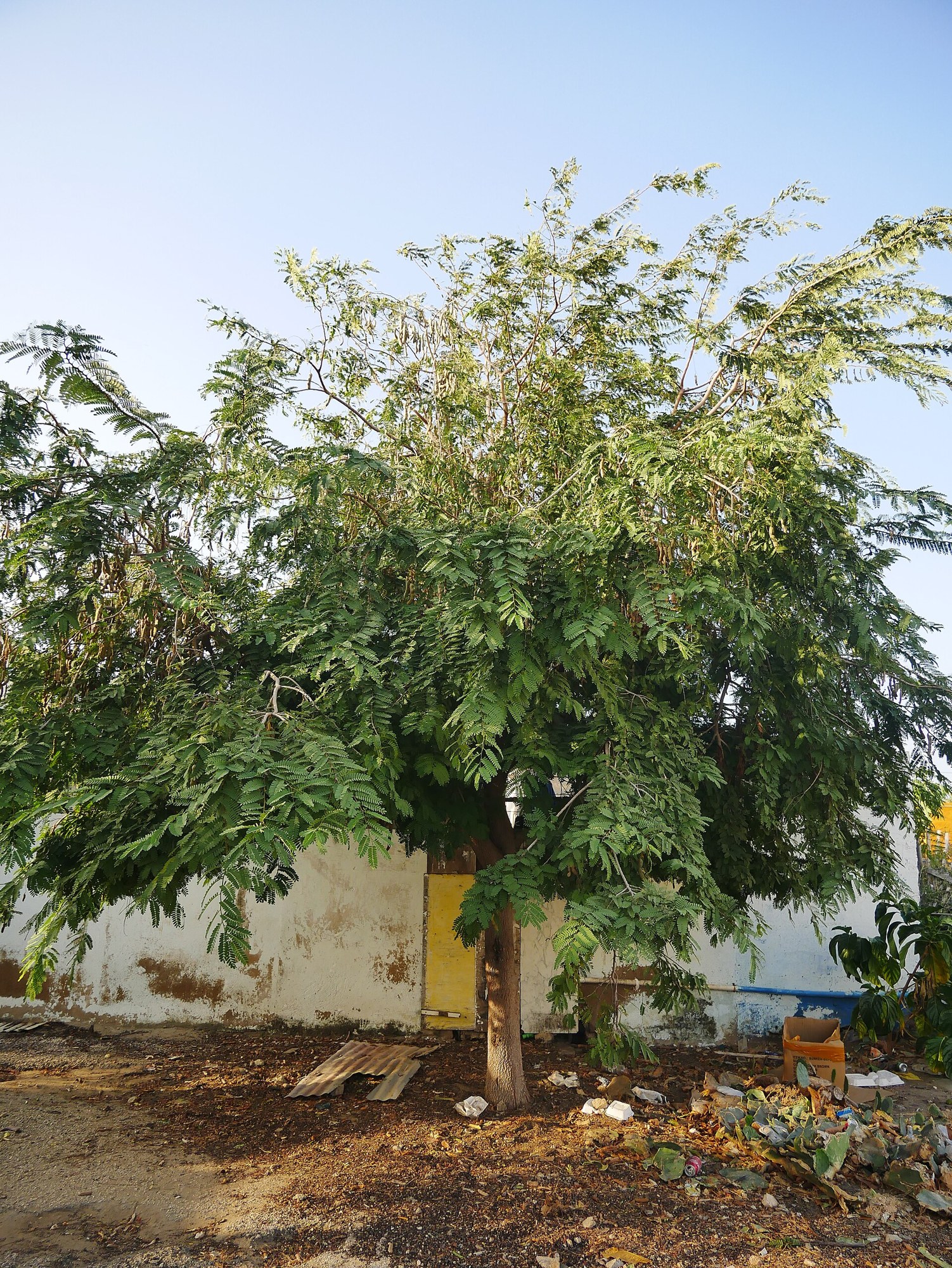
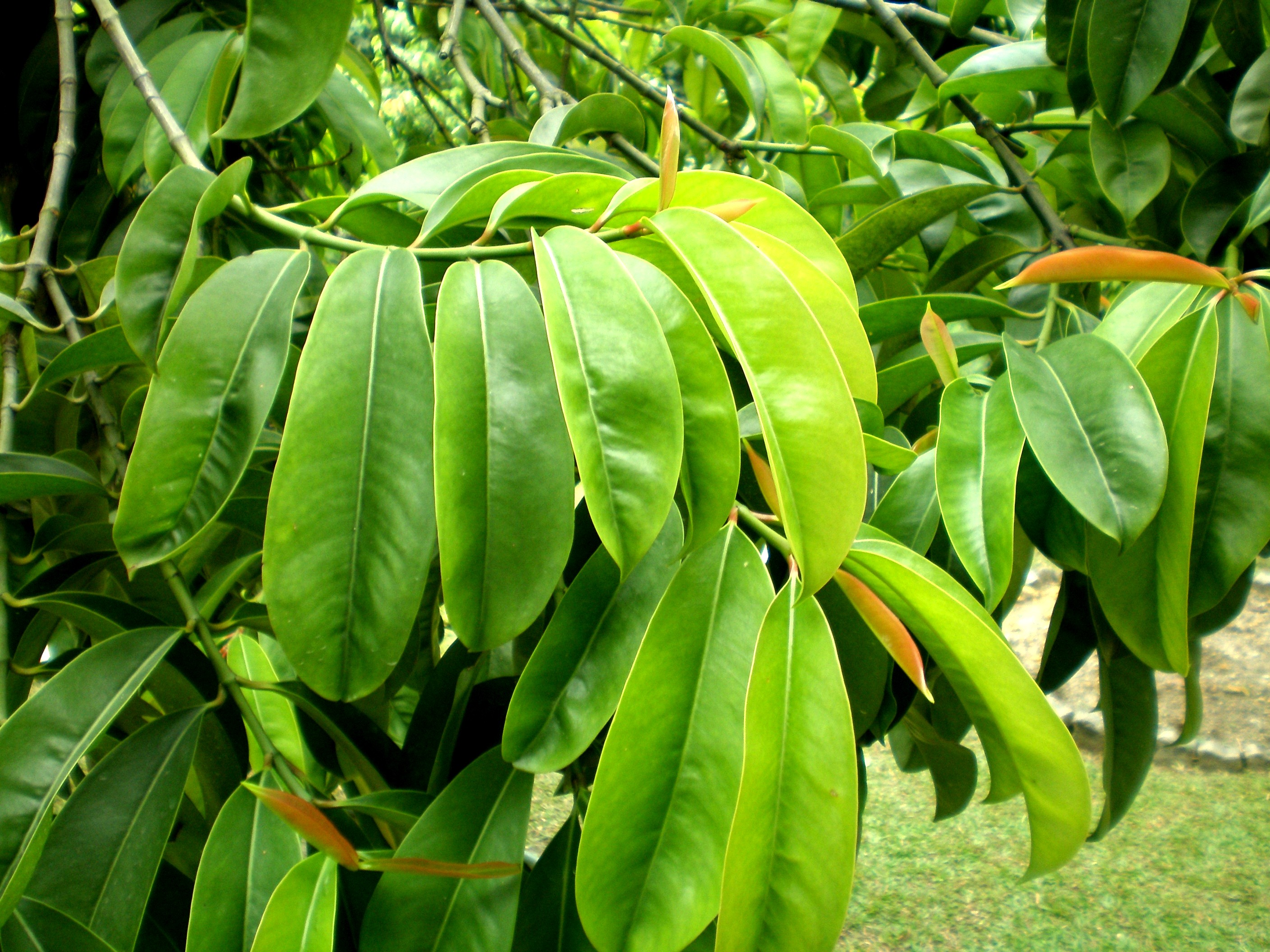
Kepayang is the tree behind buah keluak, the black seed used as a spice in Southeast Asian cooking. The raw seed is poisonous and becomes edible only after processing.
- Parts used
- Seed
- Native range
- Native. Nicobar Is. to W. Pacific (POWO/WCVP).
- Habitat
- Forest
Traditional and heritage uses
Pangium edule is native from the Nicobar Islands to the western Pacific, across the whole Malay archipelago [1]. In Sarawak the seed is among the indigenous vegetables with a high protein content [2].
In the kitchen
Pangium edule seeds are widely used as a spice in Southeast Asia, both fresh and fermented [3]. They are eaten after treatment or processing, and fermented seeds are a speciality in Indonesia [4].
Cautions and safety
Raw kepayang contains cyanide and must not be eaten. Traditional processing by boiling and burying the seeds removes most of it [5].
This entry is for information only and is not medical advice.
Sources (5)
- POWO (2026). Pangium edule Reinw.. Plants of the World Online, Royal Botanic Gardens, Kew; distribution from the World Checklist of Vascular Plants. Accessed 18 October 2026. Source
- Hoe VB, Siong KH (1999). The nutritional value of indigenous fruits and vegetables in Sarawak. Asia Pac J Clin Nutr 8(1): 24-31. Source
- Listyorini KI, Kusumaningrum HD, Lioe HN (2021). Antifungal Activity and Major Bioactive Compounds of Water Extract of Pangium edule Seed against Aspergillus flavus. Int J Food Sci 2021: 3028067. Source
- Andarwulan N, Fardiaz D, Wattimena GA, et al. (1999). Antioxidant activity associated with lipid and phenolic mobilization during seed germination of Pangium edule Reinw. J Agric Food Chem 47(8): 3158-63. Source
- Aminullah NA, Baharuddin, Syahidah (2024). Correlation of duration and depth of burying with cyanide reduction in Pangium edule Reinw. IOP Conference Series: Earth and Environmental Science 1430: 012024. Source