Lada
Piper nigrum
ENBlack pepper, White pepper
- MSLada
- IDMerica
- ENPepper
Synonym: Piper aromaticum Lam.
Family: Piperaceae
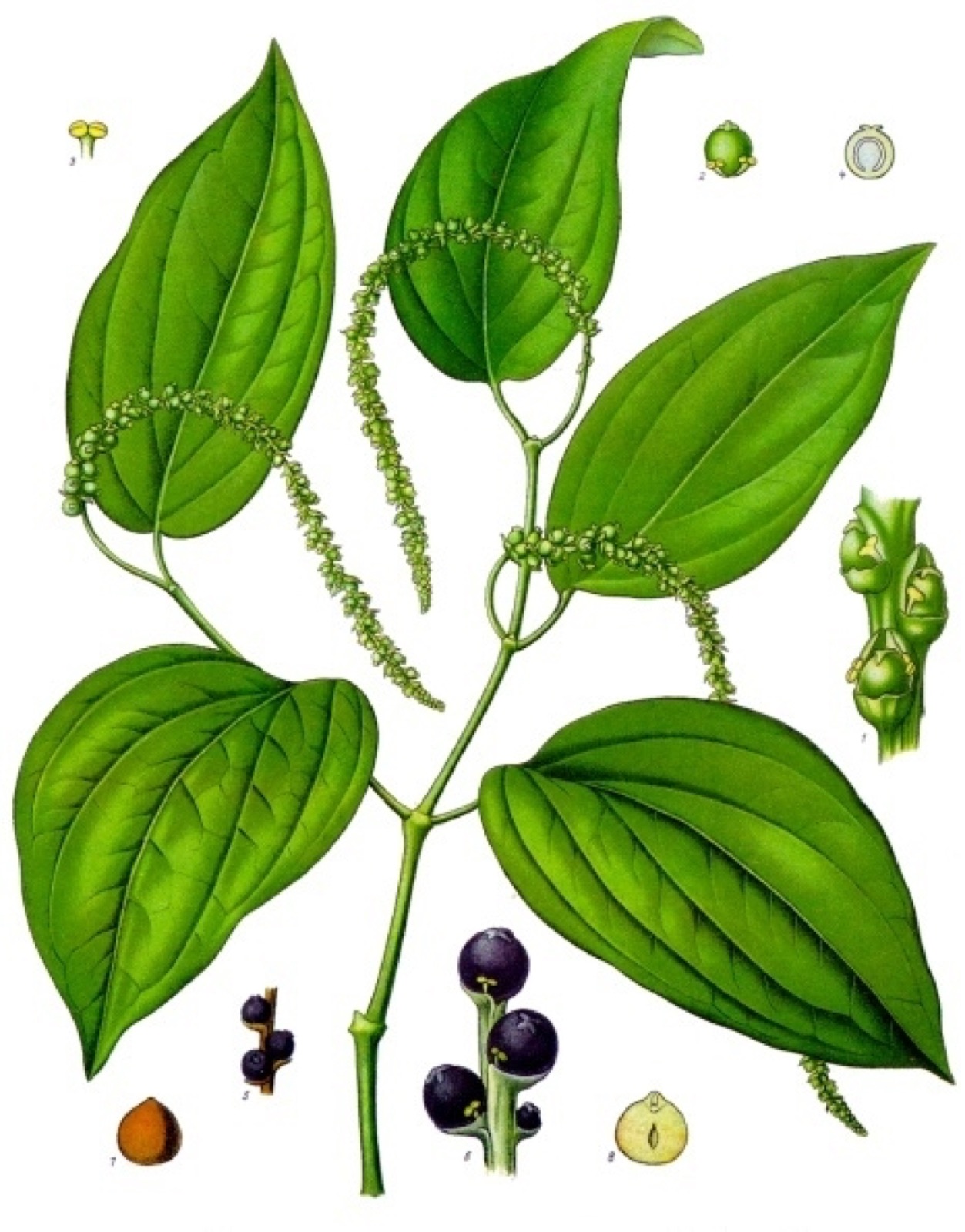
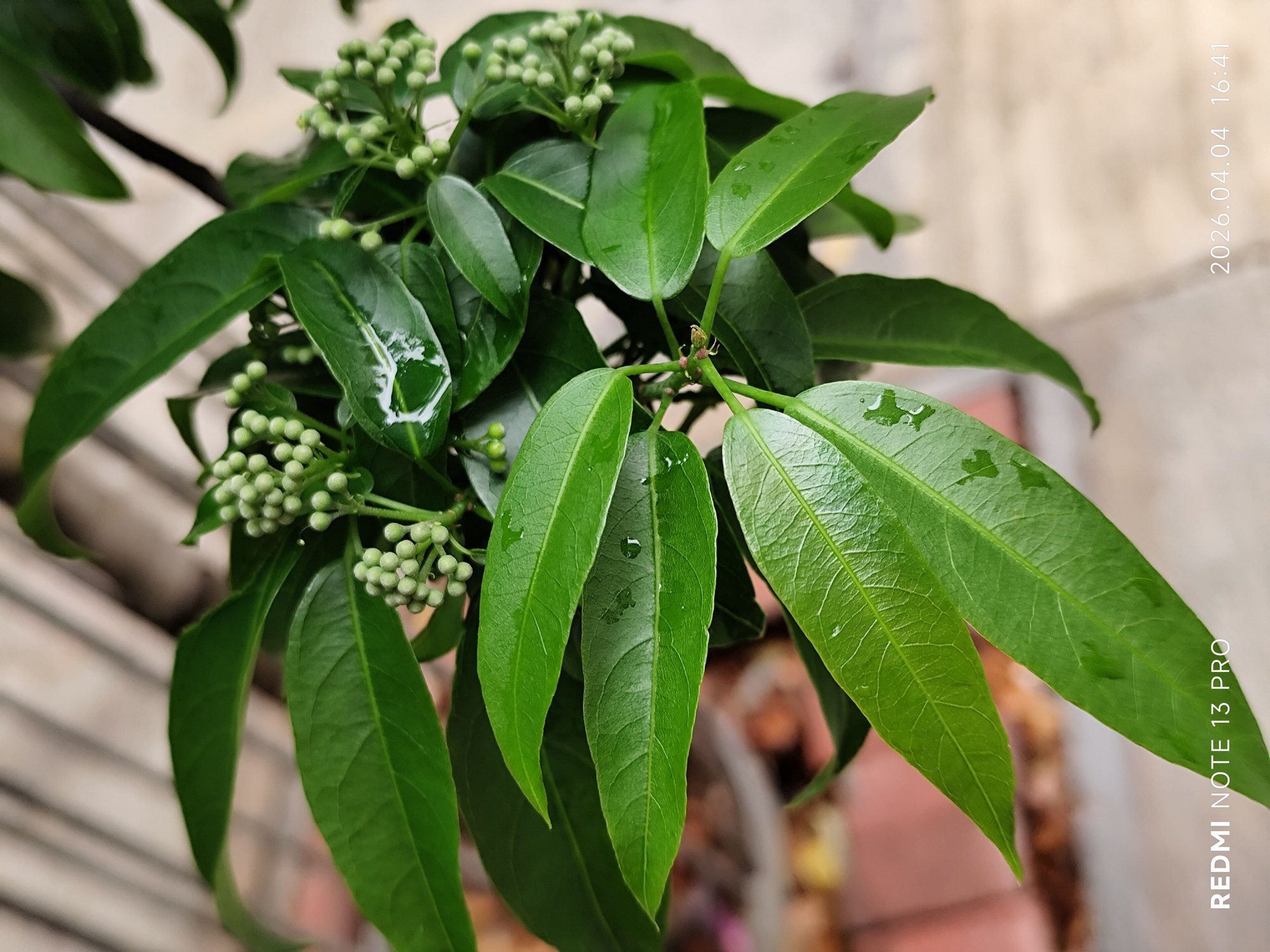
Lada is pepper, the climbing vine whose fruit gives black and white peppercorns. Native to Sri Lanka, it is one of the most widely used spices in the world.
- Parts used
- Fruit
- Native range
- Introduced or naturalised. Sri Lanka (POWO/WCVP).
- Habitat
- Garden
- Scent profile
- Spicy, Woody, Citrus
Scent profile
- Spicy Sharp, hot pepper.
- Woody Dry wood.
- Citrus A faint citrus top note.
In the kitchen
Pepper adds its own flavour to dishes and lifts other ingredients [2]. Beyond food it has been used as a preservative and in perfumery [3]. Piperine is its pungent principle [4].
Trade history
Piper nigrum is native to Sri Lanka [1]. Called the king of spices, black pepper is one of the most widely used spices in the world [2].
Cautions and safety
Pepper is a food spice. Piperine can change how other medicines are absorbed and broken down [5]; check with a pharmacist before taking piperine supplements.
This entry is for information only and is not medical advice.
Sources (5)
- POWO (2026). Piper nigrum L.. Plants of the World Online, Royal Botanic Gardens, Kew; distribution from the World Checklist of Vascular Plants. Accessed 18 October 2026. Source
- Takooree H, Aumeeruddy MZ, Rengasamy KRR, et al. (2019). A systematic review on black pepper (Piper nigrum L.): from folk uses to pharmacological applications. Crit Rev Food Sci Nutr 59(sup1): S210-S243. Source
- Srinivasan K (2007). Black pepper and its pungent principle-piperine: a review of diverse physiological effects. Crit Rev Food Sci Nutr 47(8): 735-48. Source
- Haq IU, Imran M, Nadeem M, et al. (2021). Piperine: A review of its biological effects. Phytother Res 35(2): 680-700. Source
- Lee SH, Kim HY, Back SY, et al. (2018). Piperine-mediated drug interactions and formulation strategy for piperine: recent advances and future perspectives. Expert Opin Drug Metab Toxicol 14(1): 43-57. Source