Cengkih
Syzygium aromaticum
ENClove
- MSCengkih
- IDCengkeh
- ENClove
Synonyms: Caryophyllus aromaticus L., Eugenia aromatica (L.) Baill.
Family: Myrtaceae
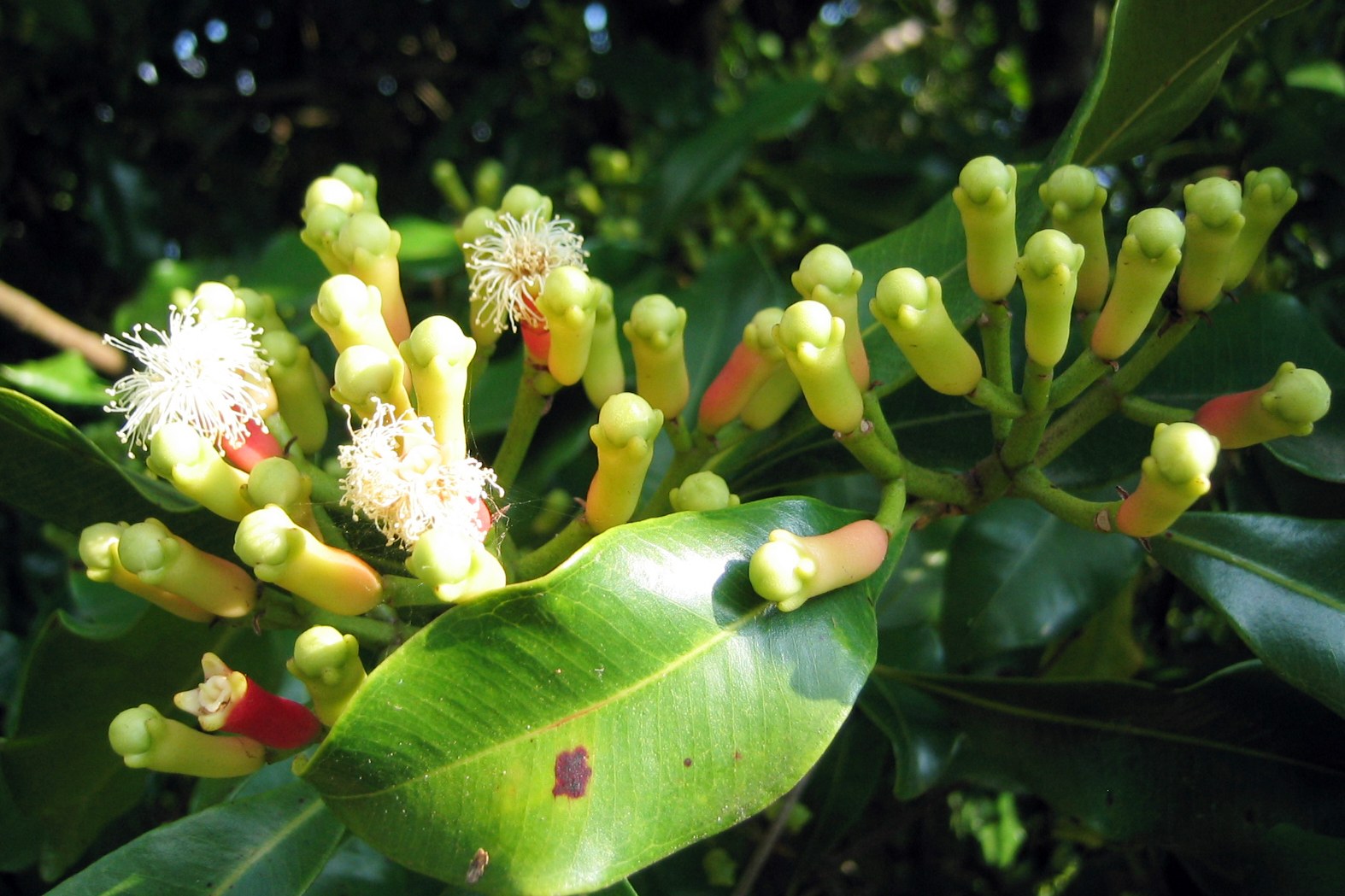
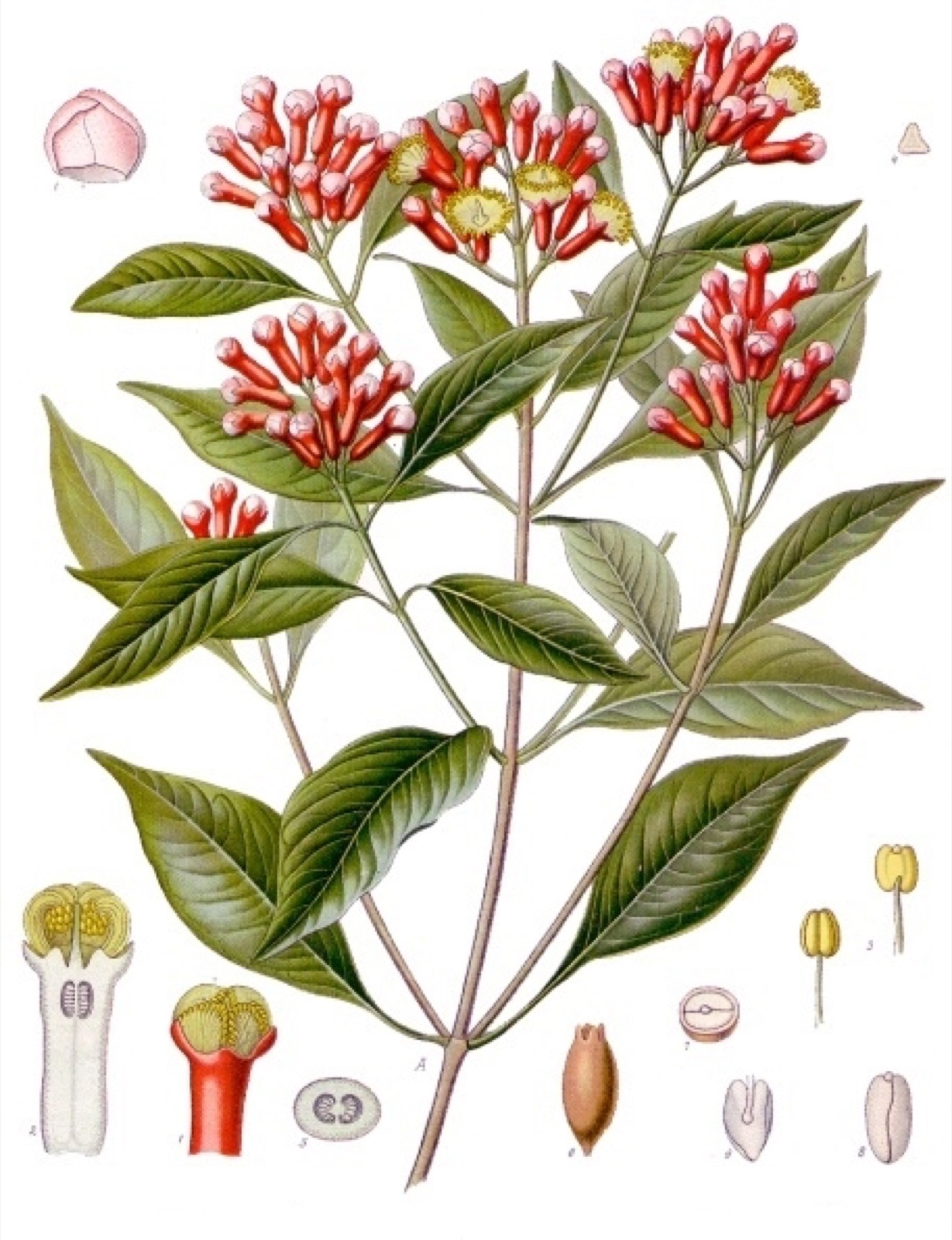
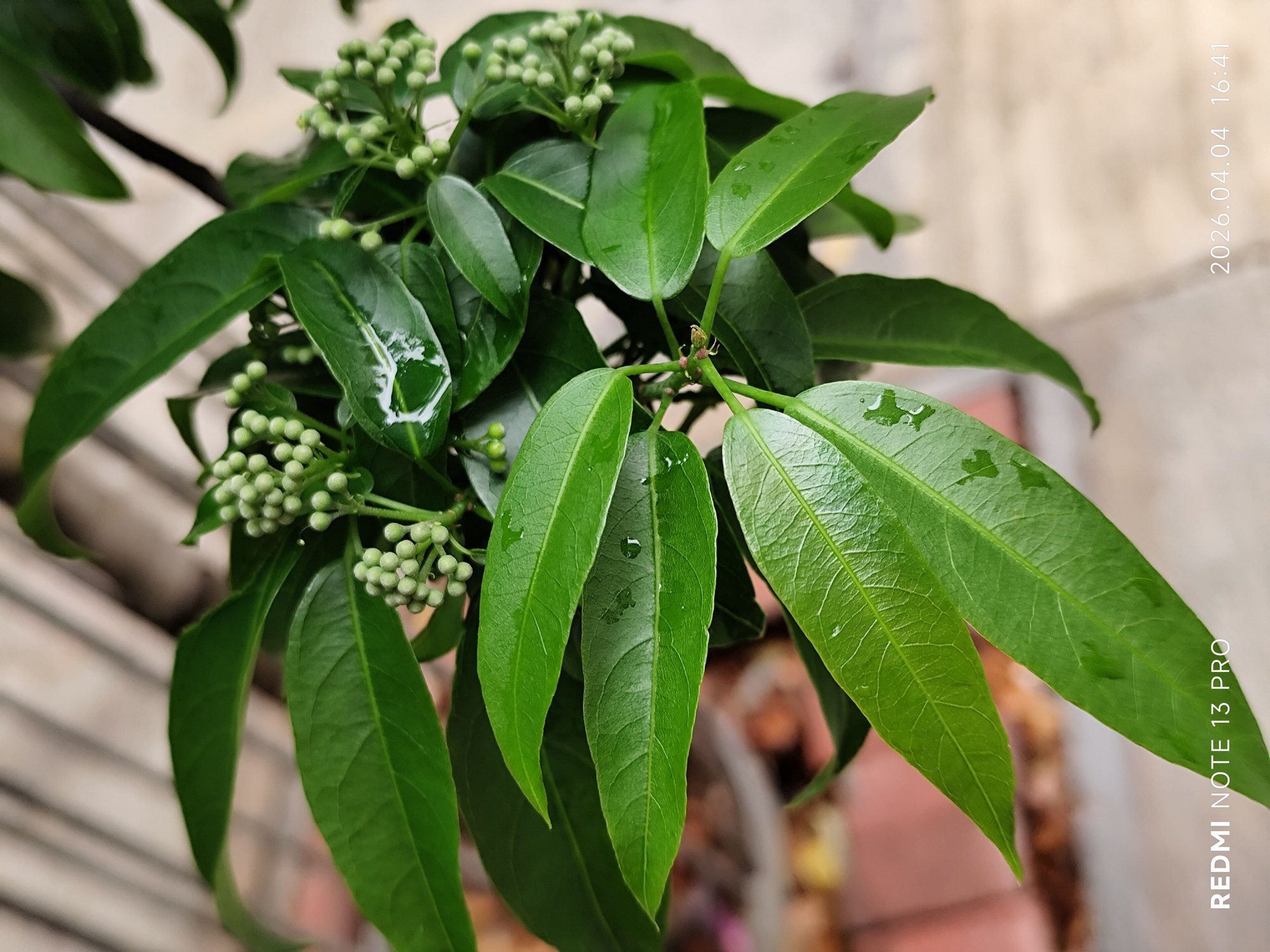
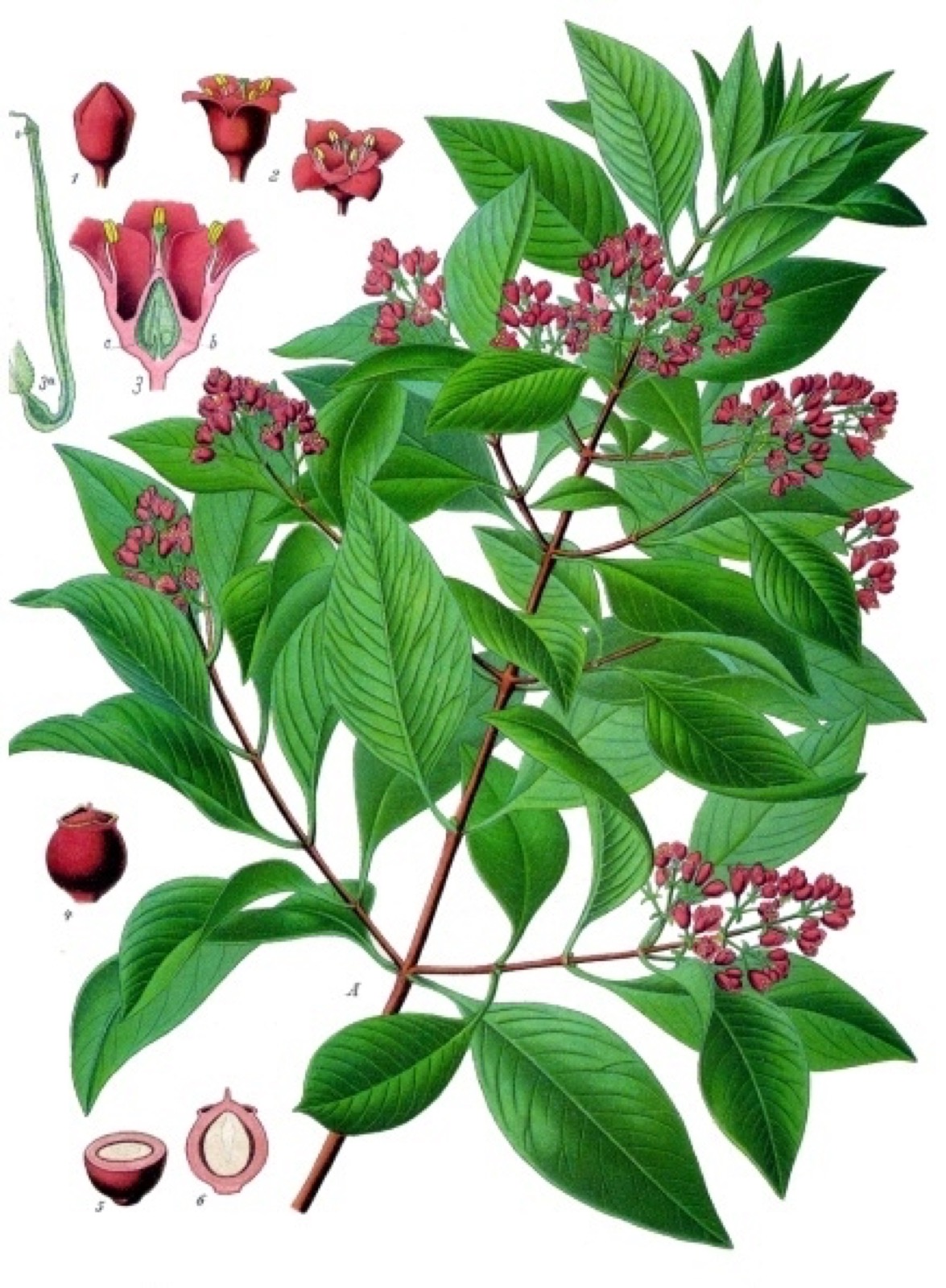
Cengkih is the clove, the dried flower bud of a tree native only to Maluku. It is a traditional spice long used for flavouring and preserving food.
- Parts used
- Flower, Essential oil
- Native range
- Native. Maluku (POWO/WCVP).
- Habitat
- Garden
- Scent profile
- Spicy, Woody, Balsamic
Scent profile
- Spicy Hot, sweet clove.
- Woody Dry wood beneath.
- Balsamic A warm, lasting finish.
In the kitchen
Clove is widely cultivated in tropical countries for its aromatic buds, which are rich in eugenol, beta-caryophyllene and alpha-humulene [2]. Eugenol is the major constituent of clove oil [3].
Trade history
The clove tree is native to Maluku [1]. Clove is a traditional spice long used for flavouring and food preservation [4].
Cautions and safety
Cloves are a food spice. Accidental clove oil ingestion has seriously poisoned an infant [5]; keep the oil away from children. Laboratory work on eugenol [6] is not evidence of effects in people.
This entry is for information only and is not medical advice.
Sources (6)
- POWO (2026). Syzygium aromaticum (L.) Merr. & L.M.Perry. Plants of the World Online, Royal Botanic Gardens, Kew; distribution from the World Checklist of Vascular Plants. Accessed 18 October 2026. Source
- Haro-González JN, Castillo-Herrera GA, Martínez-Velázquez M, et al. (2021). Clove Essential Oil (Syzygium aromaticum L. Myrtaceae): Extraction, Chemical Composition, Food Applications, and Essential Bioactivity for Human Health. Molecules 26(21). Source
- Marchese A, Barbieri R, Coppo E, et al. (2017). Antimicrobial activity of eugenol and essential oils containing eugenol: A mechanistic viewpoint. Crit Rev Microbiol 43(6): 668-689. Source
- Batiha GE, Alkazmi LM, Wasef LG, et al. (2020). Syzygium aromaticum L. (Myrtaceae): Traditional Uses, Bioactive Chemical Constituents, Pharmacological and Toxicological Activities. Biomolecules 10(2). Source
- Lane BW, Ellenhorn MJ, Hulbert TV, et al. (1991). Clove oil ingestion in an infant. Hum Exp Toxicol 10(4): 291-4. Source
- Wang XR, Li ZZ, Sun SD, et al. (2025). Inhaling Eugenol Inhibits NAFLD by Activating the Hepatic Ectopic Olfactory Receptor Olfr544 and Modulating the Gut Microbiota. Adv Sci (Weinh) 12(42): e10321. Source