Dictionary entry
Pala
Myristica fragrans
ENNutmeg, Mace
- MSPala
- IDPala
- ENNutmeg
Synonym: Myristica aromatica Sw.
Family: Myristicaceae
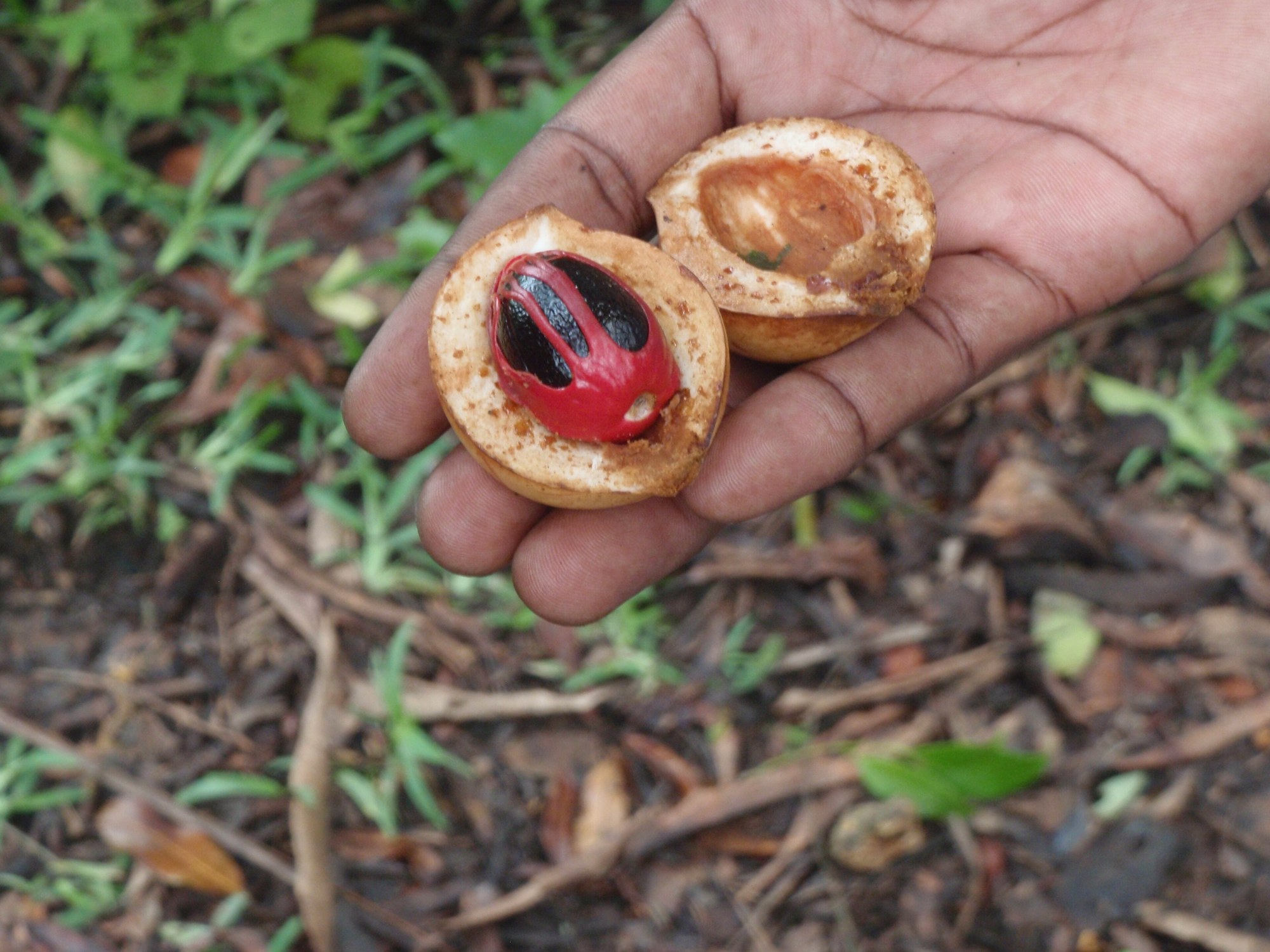
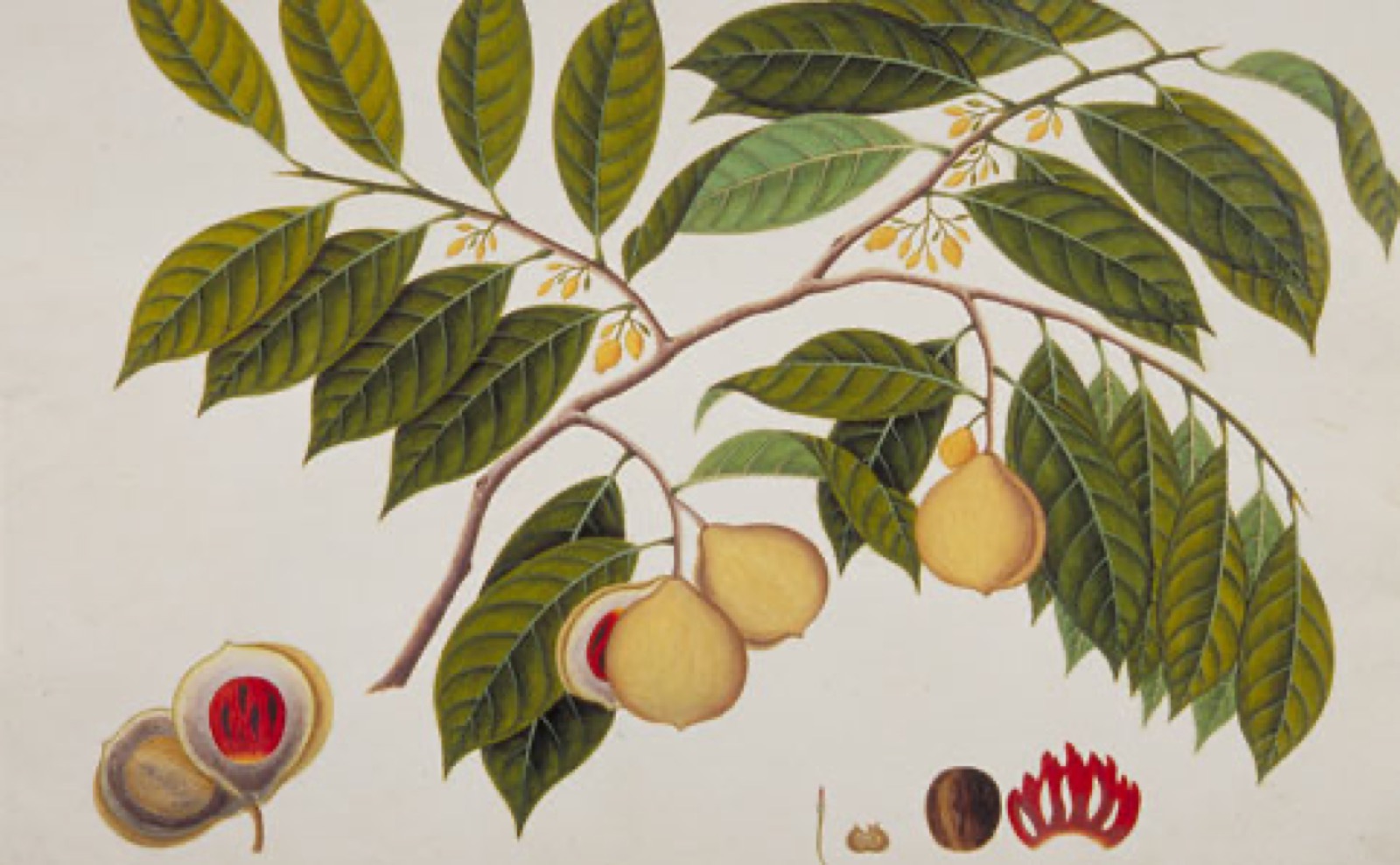
Pala is the nutmeg tree of the Banda Islands in Maluku, source of two spices: the seed, nutmeg, and its red aril, mace.
- Parts used
- Seed, Fruit
- Native range
- Native. Maluku (Banda Is.) (POWO/WCVP).
- Habitat
- Garden
- Scent profile
- Spicy, Woody, Camphoraceous
Scent profile
- Spicy Warm, sweet spice.
- Woody Dry wood.
- Camphoraceous A cool, slightly camphor note.
In the kitchen
Nutmeg and mace have long been used as spices in cooking [2]. The kernel is also used in traditional medicine systems [3].
Trade history
Myristica fragrans is native to the Banda Islands of Maluku [1]. It is the commercial source of mace and nutmeg, both long used as spices [2].
Cautions and safety
Nutmeg is a cooking spice. Poison centres record nutmeg poisonings from large amounts [4]; it should never be taken in quantity.
This entry is for information only and is not medical advice.
Sources (4)
- POWO (2026). Myristica fragrans Houtt.. Plants of the World Online, Royal Botanic Gardens, Kew; distribution from the World Checklist of Vascular Plants. Accessed 18 October 2026. Source
- Ha MT, Vu NK, Tran TH, et al. (2020). Phytochemical and pharmacological properties of Myristica fragrans Houtt.: an updated review. Arch Pharm Res 43(11): 1067-1092. Source
- Ashokkumar K, Simal-Gandara J, Murugan M, et al. (2022). Nutmeg (Myristica fragrans Houtt.) essential oil: A review on its composition, biological, and pharmacological activities. Phytother Res 36(7): 2839-2851. Source
- Ehrenpreis JE, DesLauriers C, Lank P, et al. (2014). Nutmeg poisonings: a retrospective review of 10 years experience from the Illinois Poison Center, 2001-2011. J Med Toxicol 10(2): 148-51. Source