Pandan
Pandanus amaryllifolius
ENPandan, Fragrant screwpine
- MSPandan wangi
- IDPandan
- ENPandan
Synonyms: Pandanus hasskarlii Merr., Pandanus latifolius Hassk.
Family: Pandanaceae
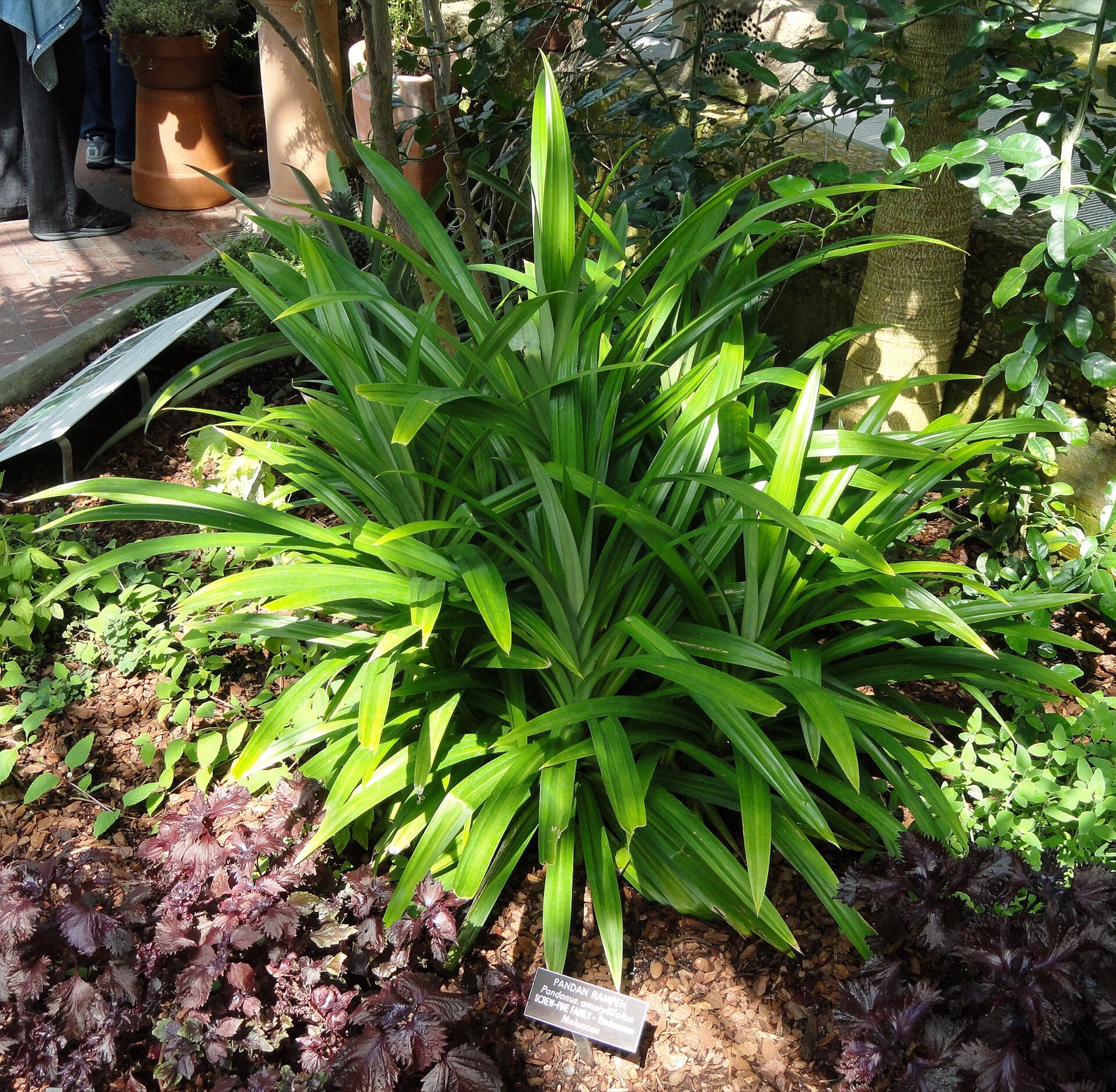
Pandan is the fragrant screwpine whose long green leaves flavour and colour rice, cakes and drinks across the region. The plant is native to Maluku and spread through cultivation.
- Parts used
- Leaf
- Native range
- Native. Maluku (POWO/WCVP).
- Habitat
- Kitchen
- Scent profile
- Green, Sweet
Traditional and heritage uses
Pandanus amaryllifolius is native to Maluku and recorded as introduced in Peninsular Malaysia, the Philippines, the Lesser Sunda Islands and New Guinea [1].
Scent profile
- Green Fresh cut leaf.
- Sweet A soft, rice-like sweetness.
In the kitchen
Pandan is a common food ingredient in Southeast Asia for its flavour, appetising aroma and bright green colour [2]. It has been consumed as food since ancient times [3], and it is widely grown across the region as a food flavouring [4].
Cautions and safety
Pandan leaf is a long-established food flavouring. Cell and animal studies of leaf extracts [4] do not show effects in people.
This entry is for information only and is not medical advice.
Sources (4)
- POWO (2026). Pandanus amaryllifolius Roxb.. Plants of the World Online, Royal Botanic Gardens, Kew; distribution from the World Checklist of Vascular Plants. Accessed 18 October 2026. Source
- Omer N, Choo YM, Ahmad N, et al. (2021). Ultrasound-assisted encapsulation of Pandan (Pandanus amaryllifolius) extract. Ultrason Sonochem 79: 105793. Source
- Wang W, Ren Z, Zheng S, et al. (2024). Botany, phytochemistry, pharmacology, and applications of Pandanus amaryllifolius Roxb.: A review. Fitoterapia 177: 106144. Source
- Tan MA, Ishikawa H, An SSA (2022). Pandanus amaryllifolius Exhibits In Vitro Anti-Amyloidogenic Activity and Promotes Neuroprotective Effects in Amyloid-β-Induced SH-SY5Y Cells. Nutrients 14(19). Source