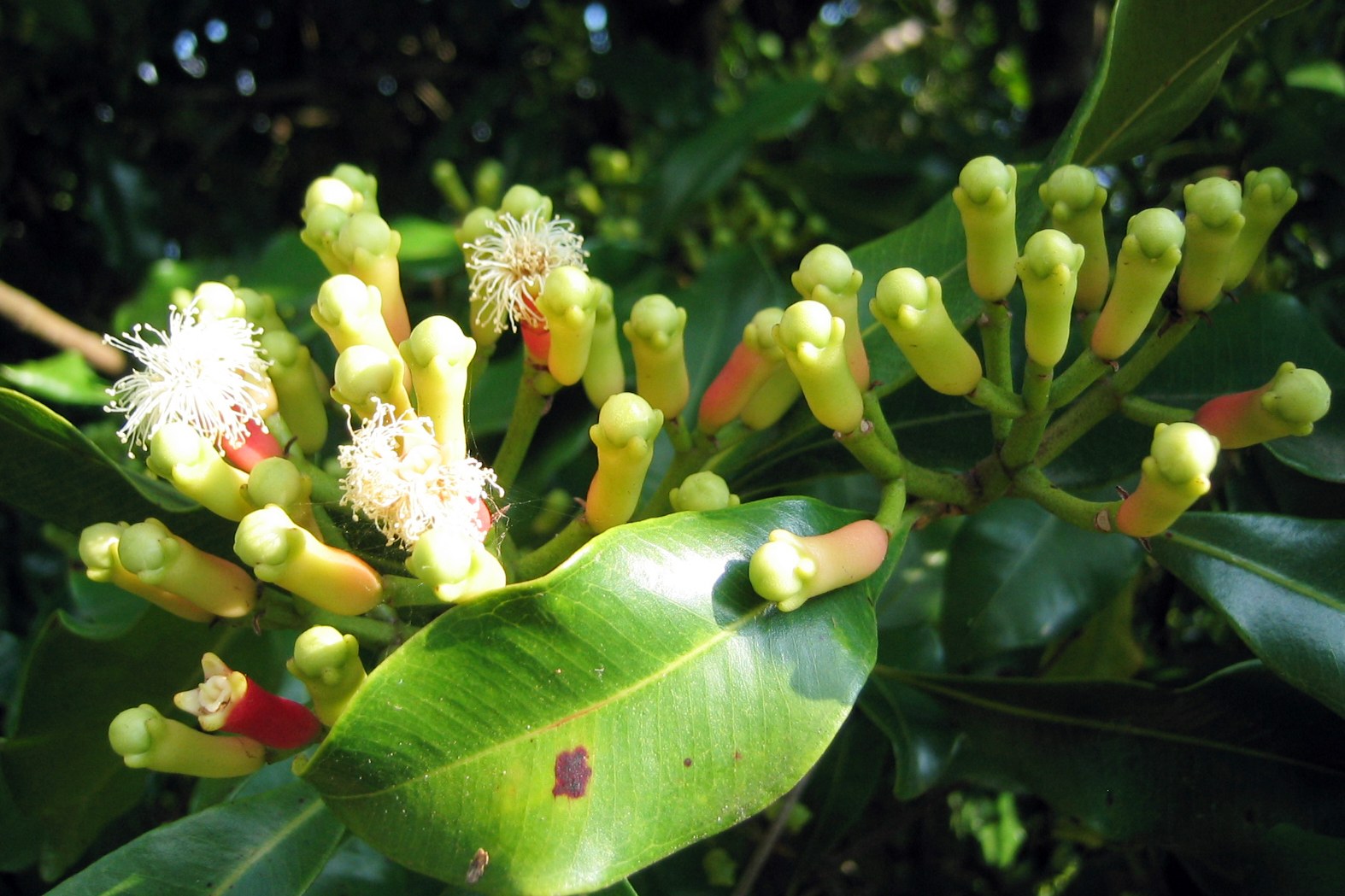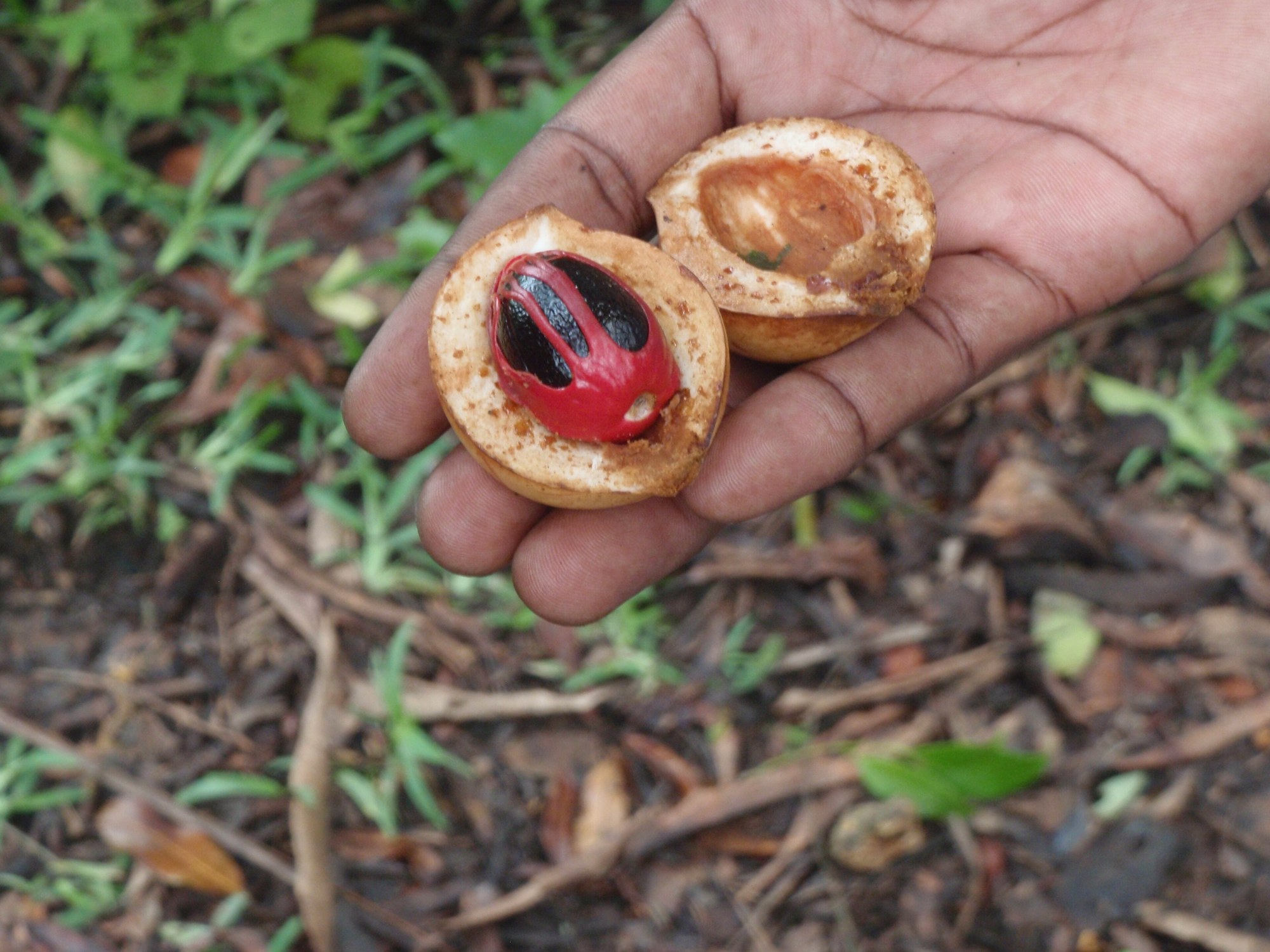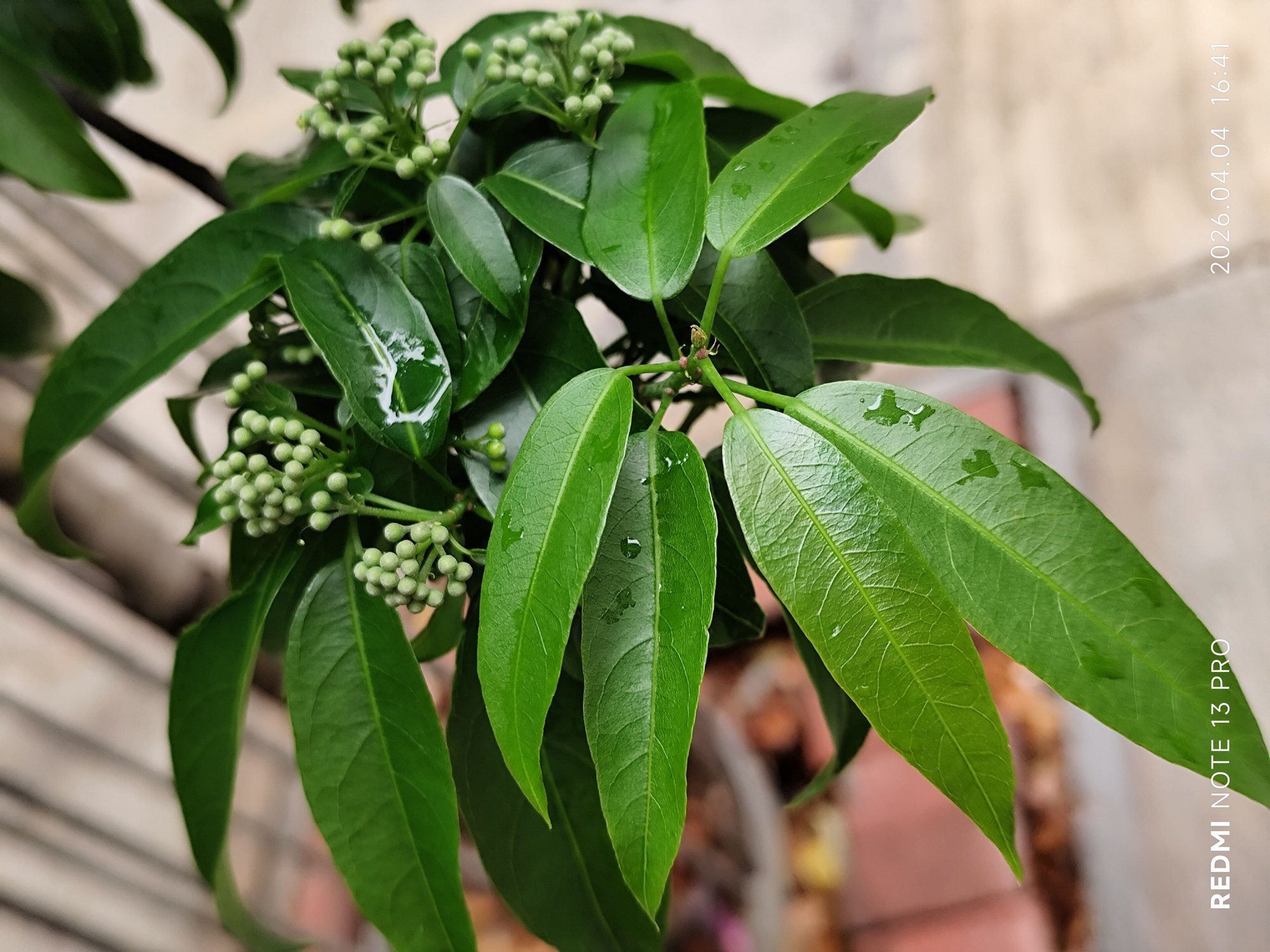
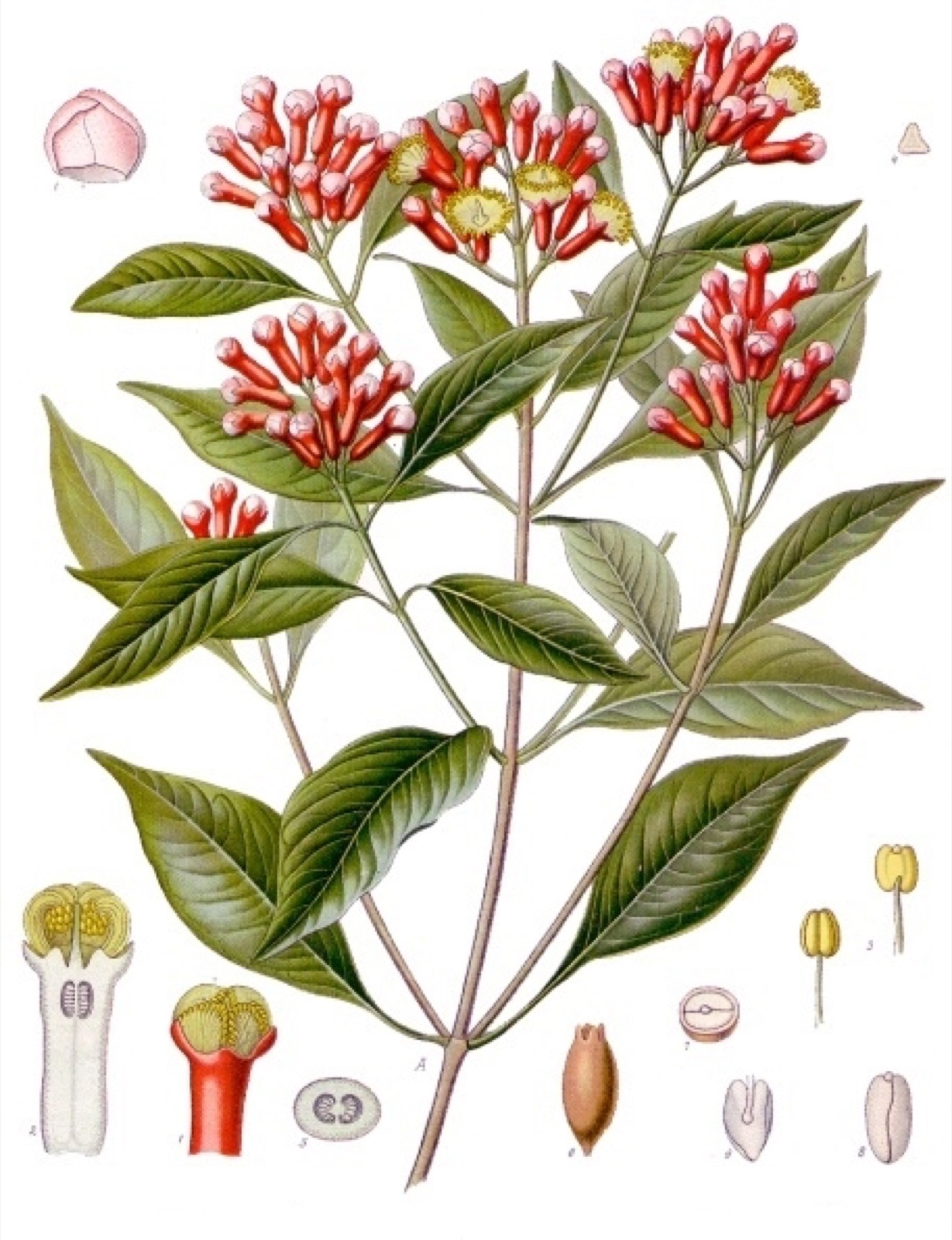
Two trees, both native to Maluku, sit at the centre of the old spice trade. Syzygium aromaticum, cengkih, is the clove, a dried flower bud [1, 3]. Myristica fragrans, pala, is the nutmeg of the Banda Islands, source of two spices from one fruit: the seed and its red aril, mace [2, 4]. Plants of the World Online keeps both native ranges short. Clove: Maluku. Nutmeg: Maluku, the Banda Islands [1, 2].
That geography is the fact that drew ships. It is also the fact this article starts from. The rest of the route (lada, kayu manis, kapur barus, gambir) joins those two plants while each keeps its own story. Each entry in The spice route has its own sources. This page uses those sources, plus Crawfurd's 1820 History of the Indian Archipelago and the native-range records in POWO [1, 5].
Cengkih, a bud from one group of islands
Clove is widely grown in the tropics now. The tree comes from one place. POWO's accepted name is Syzygium aromaticum (L.) Merr. & L.M.Perry, native to Maluku [1]. The dried bud is the spice. Reviews of the essential oil name eugenol as the major constituent, with beta-caryophyllene and alpha-humulene beside it [3]. Those are compositional facts, and they explain the smell in the kitchen.
Crawfurd, writing in 1820, already treated the clove as a Maluku plant whose cultivation and trade were matters of state as well as of the market [5]. He recorded what European and Asian traders had long known: that the bud came from the islands rather than from India, the Levant or Europe, and that the islands which held the tree held the trade. Later horticultural handbooks still treat the Moluccas as the origin and the later plantings (Zanzibar, Madagascar, Penang, and parts of Indonesia beyond Maluku) as introductions [10]. Tonnage figures belong in a source that states them for a named year.
In the kitchen the bud flavours and, in older practice, helps to keep food [3, 10]. The dictionary entry's safety line is narrower and cited: clove oil has poisoned an infant when swallowed, so the oil belongs out of children's reach. A food spice and a bottle of oil are two different things.
Pala, two spices from one fruit
Myristica fragrans Houtt. is native to the Banda Islands [2]. The fruit gives nutmeg (the seed) and mace (the aril). Reviews of the phytochemistry and of the essential oil treat those two products as the commercial spices the tree is grown for [4]. POWO's range note is the botanical limit. Everything else is cultivation.
Crawfurd's 1820 history again puts Banda at the centre of the nutmeg trade and describes the fruit and its two spices in terms a merchant would recognise [5]. The later political history of those islands is long and often violent. This article leaves that history to specialist sources. A claim about a monopoly, a massacre or a treaty will appear here once a source is cited for it. The plant fact stands now: the tree is from Banda, and the two spices are from one fruit [2, 4, 5].
Nutmeg in food is a pinch. Poison-centre reports of nutmeg taken in quantity are the reason the entry's safety section exists. This page repeats that caution and keeps to nutmeg as a kitchen spice.
Lada, a vine from another origin
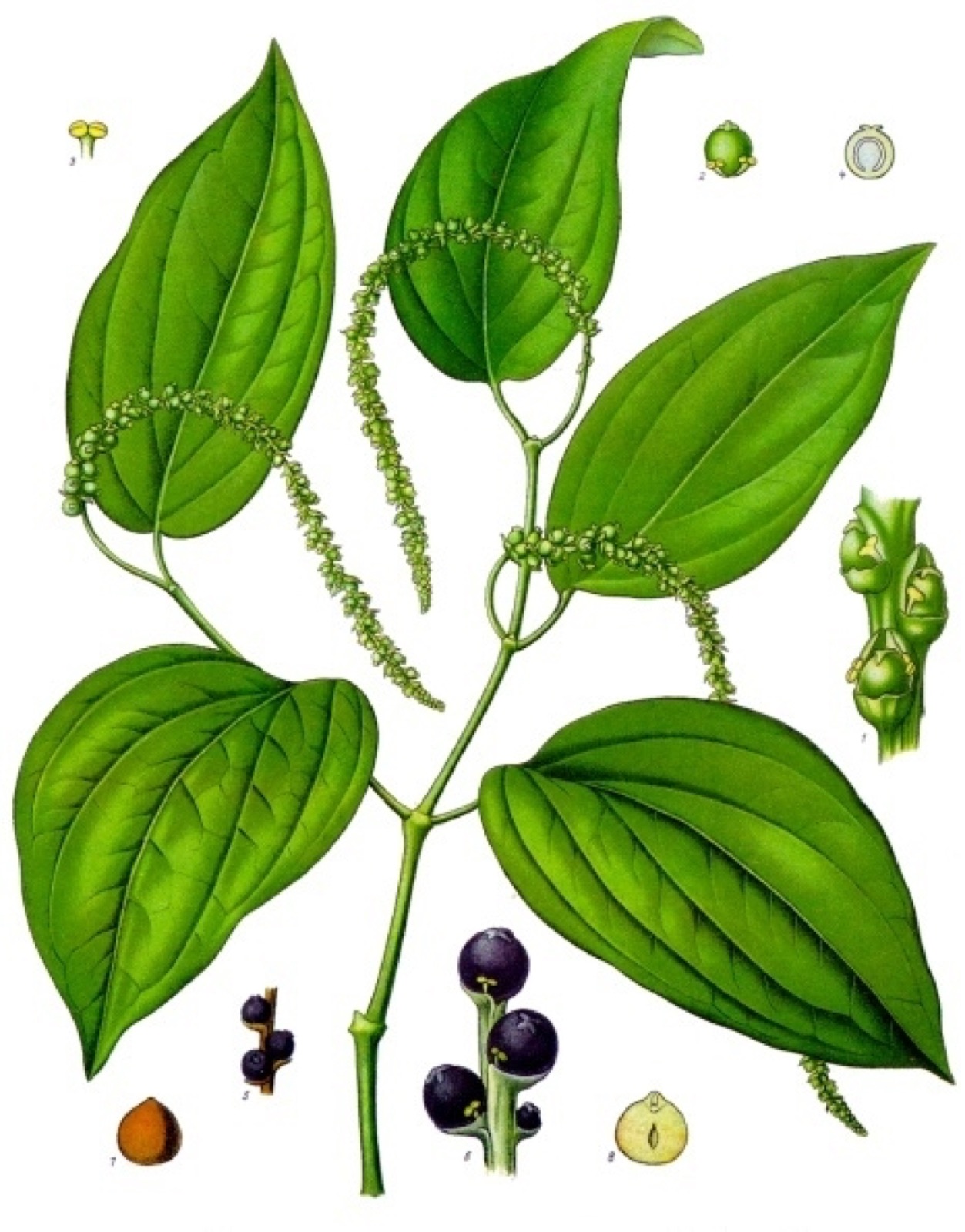
Black pepper is Piper nigrum L., a vine whose native range lies outside the Maluku clove and nutmeg islands. POWO is the range source for the entry, and this article keeps to that range [6]. Pepper joined the same ships and the same kitchens. It is in The spice route because the trade bundled it with clove and nutmeg, while its native range lies elsewhere.
The dictionary entry records culinary use and a cited caution on piperine and drug absorption. This page keeps to the plant on the map: a vine of a different origin, travelling the same route.
Kayu manis, the Indonesian bark
The kayu manis of this library is Cinnamomum burmanni (Nees & T.Nees) Blume, the Indonesian cinnamon, a different species from C. verum, the Sri Lankan tree [7]. Confusing the two is a common market habit. The scientific name on the entry is the correction. POWO holds the accepted name and the distribution. The entry's culinary and scent notes, and its cited coumarin caution, stay on that page.
Crawfurd lists cinnamon among the archipelago's trade goods [5]. The species identity is POWO's; the 1820 book is the contemporary European record that the bark was already moving [5, 7].
Kapur barus, a tree of the Sumatran and Bornean forest
Dryobalanops aromatica C.F.Gaertn. is the source of Malay camphor, kapur barus, a Dipterocarp of the wet forest and a tree of the woods rather than a kitchen herb [8]. The trade in its crystals is older than the clove monopoly stories that get retold more often. Crawfurd lists camphor as a forest product of the western archipelago [5]. The dictionary entry holds the conservation note and the cited caution on camphor poisoning in children. This page names the plant and the trade and leaves harvest advice to specialist sources.
Gambir, a leaf that travelled as a catechu
Uncaria gambir (W.Hunter) Roxb. is a climbing plant whose leaves were boiled down to a paste, gambir, used with pinang and sireh in the betel quid and also traded as a tannin [9]. It sits on The spice route because it moved as a commodity, a leaf paste alongside the buds and barks. The entry records that trade and the link to the pinang page. The areca nut classification belongs on the pinang page.
In the kitchen
Clove buds go into spice pastes, broths and sweets; the oil is a concentrated extract of the same bud and sits apart from the food spice [3, 10]. Nutmeg and mace season milk, meat and kuih in small amounts [4]. Pepper is ground over almost any savoury dish the region cooks; the vine's fruit is the peppercorn, black or white according to how it is prepared [6]. Kayu manis is bark, used as a stick or a powder, and the Indonesian tree is the one this library names [7]. Kapur barus is a forest product whose crystals carry a separate safety record [8]. Gambir is a paste made from leaves, and it belongs at the betel tray as much as in a trade ledger [9].
Those are use-notes, each tied to the entry that holds the citation. They are short notes that point to the entries.
What the collection is for
The spice route is nine plants. Six of them are named above. The other three have their own entries. A collection page is a list with an order and an intro.
Gaharu, a wound product of a different forest with its own conservation listing, has a long read of its own. It sits outside the clove-and-nutmeg group and shares the historical current only in Crawfurd's sense: a scented forest good that left the islands. The conservation status of Aquilaria and the kitchen use of cengkih stay on separate pages.
Scope
This article covers plants, places and sources. Prices, harvest volumes and a timeline of forts belong to specialist histories, and the numbers are left to them. It describes Maluku as a group of islands, Banda as a smaller group inside that story, and pepper, cinnamon, camphor and gambir as plants with other homes [1, 2, 5, 6, 7, 8, 9].
Where a plant is native, POWO is cited. Where a composition is named (eugenol in clove, the two spices from one nutmeg fruit), a review is cited. Where an 1820 observer is used, the book is named and linked [5]. Open questions stay open. The dictionary entries remain the place for the rest.
What Crawfurd offers
Crawfurd's 1820 history is a primary-period source for how a European administrator listed the archipelago's trade goods [5]. He names clove, nutmeg, pepper, cinnamon and camphor. He is useful for that inventory and for the fact that those names were already bundled in one commercial imagination. A modern flora supplies the names and ranges.
POWO is the flora this page uses for accepted names and native ranges [1, 2, 6, 7, 8, 9]. Where Crawfurd's common name and POWO's taxon line up (clove as a Maluku plant, nutmeg as a Banda plant, camphor as a western-archipelago forest product), the two sources can sit in one paragraph [1, 2, 5, 8]. Where they differ, or where Crawfurd is silent, the modern name comes from POWO alone [5].
Harvest figures, price series and the legal history of the clove and nutmeg monopolies belong to specialist monographs. The plant facts stand on their own: two trees from Maluku, a vine, a bark, a camphor tree and a catechu leaf, each with its own entry.
Composition, kitchen and the safety entries
Haro-González and colleagues review clove essential oil: eugenol as the main constituent, with beta-caryophyllene and alpha-humulene, and a set of food uses for the dried bud [3]. Nurdjannah and Bermawie treat the Moluccas as the origin and later plantings as introductions [10]. Ha and colleagues review nutmeg and mace as the two commercial spices of M. fragrans [4]. Those three papers are why this page can name a smell and a kitchen use.
The safety cautions sit on separate pages. Clove oil as a swallowed poison in an infant, nutmeg in quantity as a poison-centre problem, piperine and drug absorption, coumarin in C. burmanni, camphor poisoning in children: those cautions live on the entries, each with its own source [3, 4, 6, 7, 8]. This article notes that each caution exists and leaves the detail to those entries.
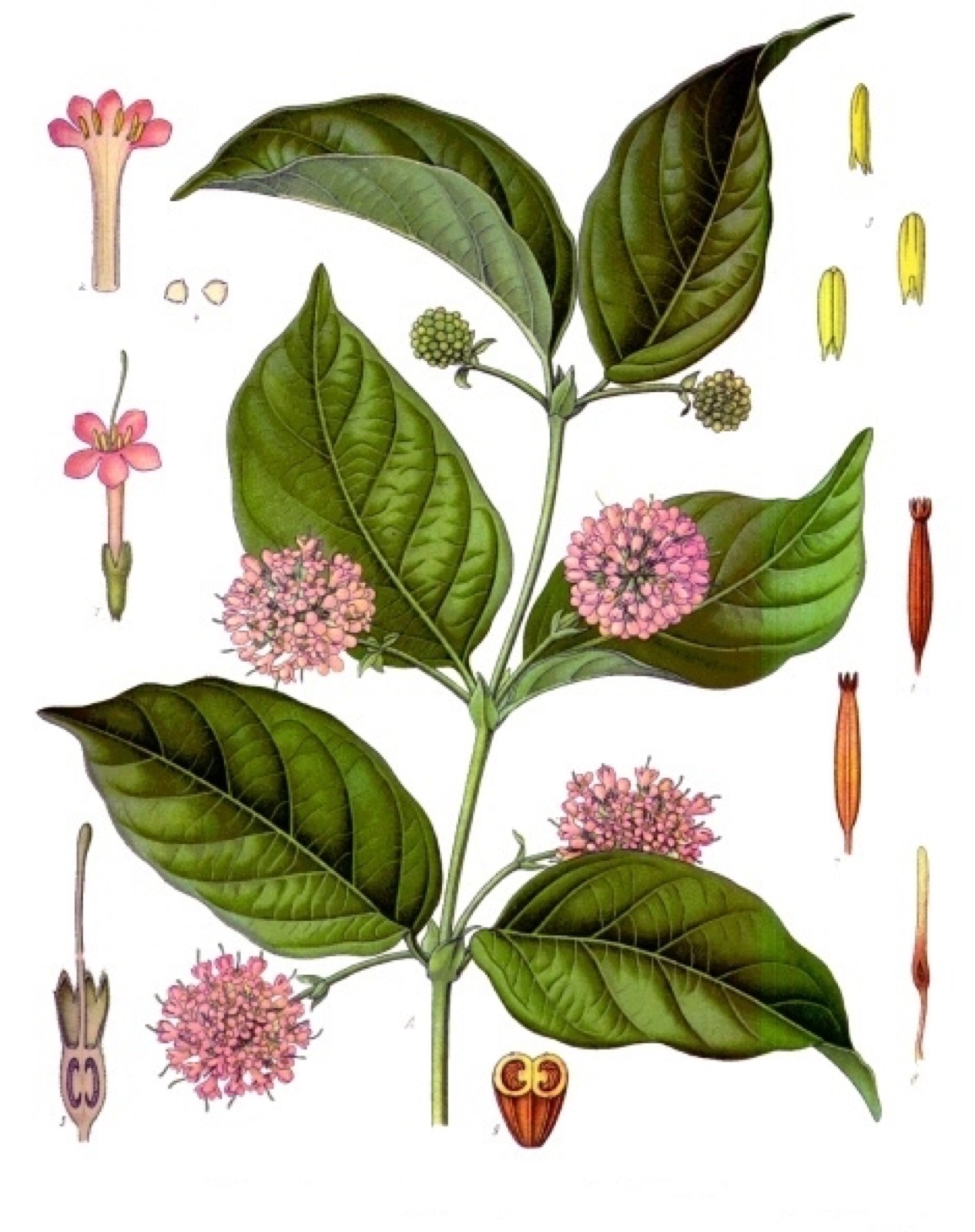
The plates on the entries are historical figures (Köhler for clove and pepper, Farquhar for nutmeg). They are printed plates, public-domain images of named plants, and they illustrate the species.
Reading the six entries beside one another
Cengkih holds the bud, the Maluku range, the oil caution. Pala holds the two spices and the Banda range. Lada holds the vine that joined the same ships from a different origin. Kayu manis holds the Indonesian bark and the distinction from C. verum. Kapur barus holds the Dipterocarp and the forest product. Gambir holds the leaf paste and the betel-tray trade.
A reader who wants only the list should use The spice route. A reader who wants a wound product of a different forest should use the gaharu long read, which has its own page. The two articles share Crawfurd as a historical witness, and each keeps its own plants and sources. The plates, the POWO records and the kitchen notes stay with the plants that own them. That is the route this page writes from its cited sources.